Friday, November 18, 2011

More from Dano on the presidential race


The commentariat is more and more seeing the R race the way I did acouple of weeks ago, that is, that it was shaping up, at leasttemporarily, as Romney vs. Gingrich. Then, there was a lot of talkabout how Cain had apparently survived his sexual harassment scandal.Now, everyone seems to see Cain as mortally wounded for variousreasons. Even before that scandal, I thought he would fall by theweight of his own vast ignorance. He's doing that--he can't thinkwhat to say about Obama's Libya policy, thinks China doesn't havenuclear weapons, has never heard of the "neo-conservative" movement,etc. He really was meant only to be just a vanity candidate.Cain's numbers show him still in contention, but there is a slow leak.The national poll numbers are going to start bouncing all over theplace when the states start voting. The Iowa Caucuses are in 48days. So, the most important polls to look at for the R's are Iowapolls. The most recent one is Cain 20, Gingrich 19, Romney 14, Paul10 Bachmann 10. Perry 5, and Santorum 5. The numbers are veryfluid--60% say they may change their mind. So, anything mighthappen there. Right now, I think the most likely scenario is thatNewt wins it.Perry really is dead, by the way. His disapproval/approval numbersare horrible and reflect no chance of a resurrection.Now, some say that Gingrich will also be exposed as too moderate and aflip-flopper, and there is some chance of that. He once believed inclimate change and some aspects of what is now Obamacare. When a"conservative" has been in politics as long as he has, it isimpossible to have always had the views that satisfy 2011 TeaPartiers. So, there is that danger for him. Also, there is thatbaggage of 3 marriages, an ethics violation, and forced resignation.The R primary voters seem to have forgotten about all that.What Newt is trying to do--and it may work with the R's--is to suggestthat he represents truly apocalyptic change because of his cerebraland visionary ideas and approach. Also, Newt says he wants 7Lincoln-Douglas style debates with Obama lasting at least 3 hourseach. That wouldn't happen, of course, but by suggesting it, he iseffectively asserting that he would do well in such marathon debates;and a lot of R voters are understandably worried about whether some oftheir candidates could debate Obama without completely embarrassingthemselves. My perception is that the R's think Newt could handleObama.Going back to his apocalyptic change thing, I think the R voters dolike to see this election--or at least would like to see it--as amajor, pivotal, Manichaean struggle of good vs. evil. Gingrichplays to that feeling. Romney does not. Gingrich would like theR's to see Romney as a competent technocrat--a manager, sort of aRepublican Michael Dukakis. If he can pull that sort of appeal off,he may be forgiven his previous moderate positions more so than Romneyhas. So, my bottom line is--still probably Romney for thenomination, but this may get very interesting, particularly the Newtthing.Obama is now beating all of them 6 or more points in head to heads.I think his strategy of (very mild and subtle) "class warfare", callsfor higher taxes on the top bracket, attacking the intransigence ofthe R's in Congress, etc., is a winner. A big danger to him,though, would be if the American economy--bad as it is right now--gotworse. A Europe meltdown might cause that to happen. If theeconomy gets substantially worse in the next year, he would be very,very vulnerable. If it stays about the same, I think he pulls itout.

Sunday, November 13, 2011

Should we be so afraid?


Everyone I talk to seems to have a story about a kidnapping, home invasion or murder. Channel 5 is doing a series about the drug war in Mexico spilling over the border. Some of the guys I know are buying AR-15 and AK-47 to give to their wives. People complain they can't sell their houses to escape the coming violence.


So far, though, the statistics don't bear it out. When considered in terms of murders as a percentage of the population, Brownsville is still safer than Texas or the nation as a whole. We are also safer in terms of violent crime. We are a little higher with theft, but most of us don't buy a AR-15 to fight off a GPS theft through the passenger window of the car.

Brownsville has about 4 murders per year for every 100,000 people. Of course, this is horrible if you are a loved one of a victim, but there is no way to run away from it and stay in the United States. You can go to Europe. Most of Europe have had under 1 murder for 100,000 people for years. Europe, right now, is probably the safest place homo sapiens has every been since the beginning of the species.


Rapes, robberies and assaults are also much lower in Brownsville than the rest of the country. Even auto thefts are lower: who would have guessed it. We are safer than Port Isabel and Harlingen.


We used to go to Matamoros for dinner, a haircut, the pharmacy. Now most everyone I know is afraid to go. This is not born out by the statistics, either. Tamaulipas has a rate of 9 murders per 100,000. This is twice that of Brownsville, but still less than Houston and much safer than going to DC (24 per 100,000). The Yucatan has a mere 2 murders per 100,000, almost down to European levels. A visit to the Mayan ruins may be safer than staying at home. http://en.wikipedia.org/wiki/List_of_countries_by_intentional_homicide_rate

Saturday, November 12, 2011

Apologizing to Hobbes


Maybe I owe Thomas Hobbes an apology. All these years I thought he was just a propagandist for Charles II. I thought Hobbes was wrong about human nature. He insisted we needed a strong government, a Leviathan, to control man's evil nature. Without this strong government, we would be in constant fear, in danger of violent death, "and the life of man, solitary, poor, nasty, brutish, and short."


This is not what I have concluded of human nature with some 35 years of talking to folks in jails, prisons, and mental hospitals. Or those people on the outside who are largely indistinguishable from those on the inside. I have tended to the argument of Rousseau that "nothing can be more gentle than man in his primitive state...." And of Kropotkin, that the natural state of man (without the Leviathan) is one of mutual aid. Differently put, people, unless society locks them in cages together like rats in a small pen, do a pretty good job of getting along. They help each other because the cooperative groups are more likely to survive. Until we have been damaged, we don't have a desire to damage other people.


I am not ready to jettison this view of human nature. But I have been reading a book by Steven Pinker that argues that when Hobbes was asking to for strong government, he had his reasons, and a good argument apart from trying to please a young king. Pinker proves quite convincingly that without strong government, in history, rates of murder have been higher. Much higher. Not uncommonly, a hundred times higher.


No wonder Hobbes was born as twins with "fear." No wonder, he wanted someone, even a silly, hedonistic Merrie Monarch, with the power to stop the violence.


Pinker has published "The Better Angels of Our Nature: Why Violence Has Declined." He compares murder rates throughout the existence of our species. He looks at the level of homicides during anarchy of the hunting, gathering, and horticultural societies. He argues a five-fold decrease in murders in moving into agricultural societies. In the move from feudal territories to kingdoms, he argues a ten-fold to fifty-fold decline in the murder rates. Since World War II, he argues we have moved into a New Peace and a time of fewer civl wars, genocides, repressions by autocratic governments and terrorist attacks.


Oh Thomas, I'll be more patient with you in the future.

Thursday, November 10, 2011

Dano's thoughts on the presidential race


My friend Dano has been sending me regular observations about the progress
of the presidential race. I think it is good stuff and I asked him for
permission to pass it on. Here it is:

Ok, I have had a few more days of the Cain scandal to absorb, and we just had another R debate; and last night we had all those ballot referenda in Ohio, Mississippi, Maine, etc.; so here are my thoughts: Perry had a big gaffe tonight and is dead because he said he was going to close 3 cabinet level agencies, and he could only remember two of them. The way he did it made it stick out like a sore thumb. It was painful to watch, even for someone who wishes him ill--such as myself. I honestly really felt sorry for the dumb-ass. It is being mentioned by commentators as one of the worst debate moments of alltime. He actually had a good debate otherwise, and later he did remember the third agency (it was Energy). Nonetheless, he is toast. He may have been anyway, but he is now. It will be an internet laughing stock type of moment.Romney did his usual competent performance, and so I assume nothing has changed for him. About 25% of the R party are for him and about 75% are pretty strongly against him.Cain avoided any further damage from his scandal and otherwise had a good night. Nonetheless, I still think he is a dead man walking. It is obvious that the scandal has enormous potential for story after story after story and detail after detail, and "drip, drip, drip. "Eventually, it will occur to the R voters that that is an unacceptable situation for a nominee, even aside from his other shortcomings, which are major. I noticed tonight that the other candidates no longer feel the need to attack him, as they did vigorously a month ago. They know it, too. The problem for them is that Cain may hang on to 20% or thereabouts ofthe vote nationally, and in Iowa--the first to vote--too long for them to gather up the residue of his eventual collapse. In other words, he may not fall fast enough to help any of the others. NYT columnist Charles Blow (a black liberal) gave a reason for this: the conservatives like what he says about race; Cain says that most blacks have been "brainwashed" to stay on the "Democratic plantation." He says that people who do not have jobs have only themselves to blame. By being for him and knowing that he says such things, he exonerates alot of typical arch-conservatives of a lifetime of racism. So, they love him and will not abandon him easily. This creates the possibility that he may stay as the number two to Romney long enough that no one else can ever reach that spot in time to stop Romney.The next in line for the anti-Romney, at this point, is clearly Gingrich. He has had all good debate performances. He does not attack the other R's, and so no one ever sees the mean side of him except when he attacks Obama, which they like, of course. His is gradually coming up in all polls. I think there is a chance that--especially if the Cain collapse speeds up--he may end up the main opponent to Romney. He'd probably still lose; people will remember his three marriages and the nasty circumstances of his two divorces (Romney made a point tonight, with Newt standing next to him, that he had been married to only one woman--an accomplishment for a Morman, I suppose--for more than 40 years). So, it still looks like Romney to me. But I would like to see it devolve to a Romney-Gingrich race just for the fun of it. Cain is never going to get that nomination, and he now is just standing in theway of others who might have a chance to knock off Romney. As for Obama, things look better for him. The ballot initiatives in Ohio, Maine, and, incredibly, Mississippi, look good for him, and there is mounting evidence that the tea-soaked R's have over-played their hand since the 2010 election. Particularly in several swing states--Wisconsin, Ohio, and Florida, as major examples--the 2010 elections created R governors and legislatures that are now patently unpopular in those states, and this phenomenon will help Obama to win those states. The Occupy Movement and other studies and articles have educated the electorate--particularly the independents--on the fact that the gap between rich and the middle class in this countryhas risen very dramatically since the Reagan election in 1980. An absolute majority of the country polls that R policies are designed to favor the rich. Also, the majority of both the independent and moderate voters have now been convinced that the R's are intentionally sabotaging the economy to help their election chances against Obama. This creates an atmosphere in which Obama can win. It creates a situation where he can make the opponents the main issue instead of himself--which he needs to do because he has been no great success. But as things stand now, he is the favorite against any R nominee. I don't know if he even deserves to be the beneficiary of these sentiments, given his choice of Geitner as Treasury Sec. and his relatively soft on Wall Street administration, but he is the one who is in position to benefit from it, if he plays his cards right. One danger is that a lot of the people on the left will conclude that he is not part of the solution, but rather part of the problem, and will stay home. We will see.

Wednesday, December 29, 2010

Joe Krause for Congress


The Good, the bad and the ugly are all lining up to run for Congress from South Texas. I'm informed by someone who should know that Cameron County will pretty well have its own Congressional district, with the county intact and a little chunk of Willancy and Hidalgo in the district. This will come about for several reasons. The Republicans with about 2/3 of the House of Representatives seats will want it, because they can isolate a lot of the Democratic (their euphemism for Hispanic) votes in one district. The Cameron County movers and shakers want it because so many look in the mirror and see a Congressman, rather like looking at the picture of Dorian Gray.

Nueces voted almost completely on racist lines this election. Hispanics lost whether running as Democrats as Republicans with the Republicans voting in high numbers. Whether Farenthold can be elected again out of Corpus Christi is questionable (apparently he's even too weird for the teabaggers). But Cameron County will almost certainly elect someone besides Farenthold and in a presidential election year, almost certainly a Democrat.

As these things go, the worst rise to the top, because they are willing to do things, say things and accept money from groups that will nauseate the slightly less-awful candidate. It is to be accepted that the Democratic candidate will be semi-literate and wildly unqualified for the job, but cunning and ruthless in getting a vote or a contribution. We can expect someone with long experience in squeezing vendors for contributions and digging up and slinging the most mud, real or invented. The campaign will be slick and professional and the candidate will only be in public with air-brushing or on television with someone who can read reading the commercials.

Then, I'll almost inevitably vote for this cretin. If it looks like he could lose to a Republican, I might even give a little money if I happen to have some.

That is why I think Joe Krause should run for Congress as a Catholic Candidate to give me a choice. I would support Dorothy Day if she would move here and run, but since that won't happen, Joe is my next best choice.

Defining the Catholic platform is pretty easy because Leo XIII and others wrote it. Then Dorothy Day wrote a lot about it as it applies to United States issues of the 20th Century. (see the enclosure link for other links to the writings of Dorothy Day). Joe lives it. The quote by Pope Paul VI,"If you want peace, work for justice" is the theme of the campaign. Valley Interfaith is the kitchen cabinet. We look to GK Chesterton, Hillaire Belloc and John Ruskin for guidance.

Some of the positions:

No death penalty. In fact, pro-life from conception to the grave, so
no abortion and no euthanasia either. Prisons will become rare as well
because punishment will no longer be a moral or legal basis for regulating
society. Inmates, felons and illegal aliens should get the vote.

A living wage based on universal ownership of property, guilds and other
protections. Capitalism is replaced by Distributism. Every child
upon conception will be given his or her fair share of the national bounty, so
every child becomes a financial boon for the mother, who of course has her own
share of the national bounty.

Profit is made up of unfairly withheld wages. As Ruskin says, the responsibility of the businessman is to bring prosperity to the community. The responsibility of the lawyer is to bring justice to the community. The responsibility of the doctor is to bring health to the community.

Accumulated wealth is a form of violence. And shows a lack of faith. Anyone who accepts stewardship over wealth or power must also accept personal poverty and precarity.

No usury. All debts are cancelled every seven years. All property is redistributed equally every fifty years. (We're way overdue, so we can start that now).


No borders. Borders are a form of violence created to allow the
wealthy to protect their wealth. Strangers are welcome.


No wars, no nuclear weapons.


Quick, tell me Solomon Ortiz' and Blake Farenthold's campaign slogans. Now tell me Joe's wouldn't be better. Run Joe Run.

Thursday, December 23, 2010

Political Corruption


Every corrupt politician's favorite rant is against political corruption. As a rule, the more corrupt the more ranting.

It is hard to imagine a political scene without corruption. Willie Stark (when setting up an opponent's suicide) in All the King's Men, said, "Man is conceived in sin and born in corruption and he passeth from the stink of the didie to the stench of the shroud. There is always something."
Politicians who steal are as common as junkies with bindles. Deuteronomy and Timothy both warn us not to muzzle the ox that grinds the grain. I've heard insiders use this as the justification for allowing a little corruption. A popular saying in Austin about Texas lobbyists, is that if you can't take their money, screw their women, drink their whiskey and still vote against them, you don't belong in the legislature.
One method is to get the million dollar cash bond from the drug dealer, knowing he will jump bond. The county gets the money, and this improves everyone's (politician's) living conditions and patronage, and who cares about the drug dealer anyway. He won't come back.
Another form of this corruption is to cruise the poor area of town and find cars that were too expensive for the house. Go ask the homeowner if anyone claims the car and often they'll say "no." Then the District Attorney's office has a lot of cool cars for undercover operations or resale. It is also a way to get houses, cash, heavy gold chains and Scarface posters.
I can't muster much outrage anymore. After a while, neither could Lincoln Steffens, who made it his career. I've often suspected that the small bribes in the Mexico I visited in the 1960's and 70's were less harmful than the high cost of entering the legal system in the United States that excluded so many people (then and now).
I don't believe Robert Penn Warren was much outraged either. Another quote from All the King's Men:
Process as process is neither morally good nor morally bad. We
may judge results, but not process. The morally bad agent may perform the
deed which is good. The morally good agent may perform the deed which is
bad. Maybe a man has to sell his soul to get the power to do good.

More Ian Morris: It's not who wins, but whether the game matters.


Daniel Bell's book, the End of Ideology, was popular when I was young. The general idea was that prosperity and technilogical advances had made all this left-right ideology unnecessary and beside the point. Then, every one got excited about politics in the sixties and I decided that Bell must have been wrong.


Morris' book (which I have now finished) makes me wonder if maybe Bell was right, after all. I would miss celebrating the 19th Century radicals like Debs and Haywood, but if the pie is growing as fast as Morris believes, worrying about politics is a waste of everyone's time. We should all just make sure that as many of us as possible have the most advanced technology available and scarcities will disappear. The idea would not be to find a fair distribution of property for the poor, but just make sure everyone could get his or her hands on the lastest computer to be implanted in the brain or gene modifier or energy producer or super grains; then the meaning of "poor" evaporates.


Hey, I'm tired of politics anyway, so this will be fine with me.


Morris ends his book with a Kipling poem. Just like David Allen Coe's perfect country and western song with drunks and prisons and trains in it, a great history should end with a Kipling poem. Maybe it should have started with a poem by Robert Service, but I was thrilled to get to then end and find, "Oh, East is east and West is west..."

Sunday, December 19, 2010

Ian Morris: Why the West Rules-for Now

Ian Morris gives little examples of alternative history. What if, the Chinese had burned the Royal Navy, killed Admiral Nelson, sacked every town along the south coast of England made Queen Victoria a subject?

He then goes on to show why this could not have happened.

I like alternative histories as science fiction. You know, what if the South had won the civil war? What if the Greeks had lost to the Persians at Thermopylae? What if, the Germans had killed Hitler early in the war?-- that sort of thing.

I also like Morris' explanations about why everything became what it had to become, because of "maps, not chaps." He says, "Once we recognize that chaps (in large groups and in the new broader sense of the word) are all much the same, I will argue, all that is left is maps." His larger sense of the word "chaps" includes women, lower-class men and children.

Morris is an archaelogist and ancient historian, specializing in the classical Mediterranean of the first millennium BCE, so he takes his discussion further back in time than the modern historians. He offers a broad approach, "combining the historian's focus on context, the archaelogist's awareness of the deep past, and the social scientist's comparative methods." He got help from botanists, zoologists, chemists, geologists and other specialists. I think he might have also tossed in a philosopher, say Derk Pereboom, and a Neuroscientist, maybe Antonio Damasio, but nonetheless the result is extraordinary.

I have not yet reached the punchline, that is the part about "for Now." The book appears to be about 600 pages long. I'm reading it on the Kindle, so I don't know for sure, but it must be a hefty tome in hardback. Morris makes a joke about the length by quoting Samuel Johnson on Paradise Lost, "None ever wished it longer than it is."

So far, his book is for me like those of Jared Diamond (who he discusses), I hope just keeps going on.

Dr. Pangloss and the best of all possible worlds.


I have been reading a book by Ian Morris called Why the West Rules--For Now: The Patterns of History and What They Reveal About the Future. I would usually want to finish a book, before making a comment, but this one is long and it is a keeper. It is a wonderful book; every page causes me to wonder about something. And it may be one of those sea change books that causes everything to look different once it is read. (I know, that sea change metaphor is hackneyed. The phrase always brings to mind for me, "Full fathom five thy father lies/ of his bones are coral made/ Those are pearls that were his eyes/ Nothing of him does fade/ but doth suffer a sea-change/ Into something rich and strange." So I keep using it.)
Morris quotes Voltaire: "'All is for the best in this best of all possible worlds,' says Dr. Pangloss-again, and again, and again--in Voltaire's eighteenth-century comic classic Candide. Despite
contracting syphilis, losing an eye and an ear, and being enslaved, hanged, and caught in not one but two earthquakes, Pangloss sticks to his story. Pangloss, of course, was Voltaire's little joke, poking fun at the silliness of contemporary philosophy, but history has thrown up plenty of real-life versions."
I read an English translation of Candide, Or Optimism, I think as assigned reading, in high school and enjoyed the joke and was completely persuaded that Pangloss and Leibniz (who I did not, and have not, read) must have been complete idiots.
Now, because of Morris' book, it occurs to me that Dr. Pangloss may have been right, not about the optimism part, but because this is the best of all possible worlds, because it is the only possible world. This also, makes it the worst of all possible worlds, of course, but if everything had to turn out the way it does, there may be no reason with Dr. Pangloss to rejoice in the awful things going on around us, but there is little reason to be suprised or disappointed, either.

Saturday, December 11, 2010

Free Will and St. Augustine: Liberum Arbitrium


I do not believe in free will. Schopenhauer's words, "Man can indeed
do what he wants, but he cannot want what he wants," accompany me in
all situations throughout my life and reconcile me with the actions of others,
even if they are rather painful to me. This awareness of the lack of free
will keeps me from taking myself and my fellow men too seriously as acting and
judging individuals, and from losing good humor. Albert
Einstein 1932.
A great deal of my free-pondering time has been devoted to the question of free will. I know this may not seem a question that matters in every day life, but I think it does. If there is no free will, the criminal justice system is founded on a false premise. If no one, when we look hard enough, acts intentionally or knowingly, but only as they must based on determinism, there is no basis for the mens rea that is usually required for punishment. Punishment itself is undermined. The whole federal guideline scheme based on "just deserts" is wrong. Criminal defense work apart, rejection of free will impacts how we interact with other folks in day to day life.
An anonymous comment to my last blog on "free will" refers to a Catholic Encyclopedia entry that affirms "free will." I take this response seriously. A great deal of my understanding of "free will" comes from Augustine, Aquinas and other Scholastics, and Pascal. However, I am persuaded none of these would embrace the modern concept of "free will" as we use the term and as we wield the term, as if it were a bludgeon, to kill our fellows. I say this in a quite literal since; a juror to whom I spoke after the verdict, justified his decision to kill with the term "free will."
The usual translation of "LIBERUM ARBITRIUM" into English is "free will." However, when Augustine writes of liberum arbitrium, he describes something very different from the excuse we today use to imprison and execute each other in the penal system. Augustine discusses liberum arbitrium in the Book V of "The City of God." Augustine leaves no doubt that the will or power of God determines everything in the world and that God knows what the future will be before hand. Augustine even reconciles himself with those who call it "fate." "If anyone attributes their existence to fate, because he calls the will or the power of God itself by the name of fate, let him keep his opinion, but correct his language."
Augustine discusses the twins, Esau and Jacob, to show that astrology cannot be true. (My translation calls the astrologists "mathematicians.") They were born at the same time, but had completely different predetermined lives. Our question though is why one son was loved by his mother (and God), and the other was not, and whether either Esau or Jacob had any control over the outcome of their lives?
Augustine tells of those who believe in determinism, that is, those who believe those who believe fate is "the whole connection and train of causes which makes everything become what it does become" are not in disagreement with him, but merely in a verbal controversy, "since they attribute the s0-called order and connection of causes to the will and power of God most high, who is mostly rightly and most truly believed to know all things before they come to pass and to leave nothing unordained...."
Augustine qoutes verses of Annaeus Seneca, "The Fates do lead the man that follows willing: But the man that is unwilling, him they drag."
So then, if "the order and connection of causes" leaves nothing unordained, what room is there for Augustine for this thing, Liberum Arbitrium? To begin with, this word "will" which in Latin is "voluntas" and not "arbitrium" should probably be "decision" or "judgment" or "discernment." (Look at the franciscan-archive. org linked under the title).
God's will is something different, but in the Augustine writings regarding man, substitute the word "decision" for "will."
God creates the will of man. Augustine, says, "In His supreme will resides the power which acts on the wills of all created spirits, helping the good, judging the evil, controlling all, granting power to some, not granting it to others."
And, "Wherefore our wills also have just so much power as God willed and foreknew that they should have...."
Our decisions are ruled by necessity, according to Augustine. "But if we define necessity to be that according to which we say that it is necessary that anything be of such or such a nature, or be done in such and such a manner, I know not why we should have any dread of that necessity taking away the freedom of our will."
So, I don't believe Augustine or the Church embrace what we today call "free will." Pascal devotes "Provincial Letters" to this argument and makes it much better than I can.

Sunday, September 27, 2009

Thoughts About Free Will


The first exposure I had to the determinism-free will discussion was in elementary school when we attended the Calvary Baptist Church in McAllen, Texas. The argument was if God knows everything and is all-powerful, he knows ahead of time what we will do and he made us that way, so we can't really be making choices. Differently put, no one really chooses the next step in life if it has already been decided by an omnipotent, omniscient God.

As a little boy, intuitively, I thought I was making choices, but I also had a strong sense I was being tossed around by powers far greater than me.

Although Baptists tend to believe in Free Will, there has long been a Calvinist contingent among the Baptists:
"...the earliest Baptists were not Calvinists, even though they had their beginnings in a Calvinistic environment. It was a quarter of a century before Calvinist views appeared in Baptist life. Even then, for a considerable period of time there were two different groups of Baptists in England, General Baptists (non-Calvinistic) and Particular Baptists (Calvinistic). Later (1891) the two groups merged, but many congregations on both sides were suspicious of the merger and remained separate. In America, the first Baptist church (FBC of Providence, Rhode Island) had both Calvinists and non-Calvinists in its membership."

The big issue is whether God picked those who were going to hell and those going to heaven before birth.

We are long since Catholic converts, but that does not really resolve the issue, even though the Catechism now state,

"Man is rational and therefore like God; he is created with free will and is master over his acts."

The anti-Calvinist protestants accuse Calvin of having cribbed from the Catholic St. Augustine for a reliance on determinism. And The New Advent Catholic Encyclopedia (cited in the link) discusses the issue as far from settled. I discussed Pascal's falling out of favor with the powers of his day because of a Catholic belief in determinism.

Mostly now, people talk about biological and psychological determinism, but I think it is largely the same discussion as God's determinism.

My first exposure to this type of determinism was when I read Walden Two by B.F. Skinner when I was still in High School. I kept the intuition that I was making free choices, but I could not find an strong argument against Skinner's determinism.

In the decades since, I have seen little evidence that people have choice in life. At most, we have an illusion that we are making a choice, but that choice is determined by prior causes. Recently, I read Living Without Free Will by Derk Pereboom. He makes the case for "Hard Determinism" and "Hard Incompatibilism." That is, factors beyond our control produce all of our actions and this fact is incompatible with a belief we are praiseworthy or blameworthy for our actions.

If this is true (and Pereboom argues it as scientific fact), the implications for life and society are huge. For starters, it demonstrates our criminal justice system is based on a false premise.


Sunday, June 28, 2009

Ice Will Suffice


I was recently sitting with a friend watching the river.  We were discussing how the world would end, or probably more accurately, how human beings would die out.

He urged, (correctly, I think) that it was inevitable we would blow ourselves up with nuclear weapons and the only question is when.  I suggested, that although I have a prejudice in favor of people over other species, this might leave a pleasant enough world for smaller creatures.   Chernobyl might be the pattern.  The horses and cows died and the human beings left or died. But the lynx and the eagle owl may have made a comeback after homo sapiens left their habitat.  Studies have shown plants like soy and certain rodents have evolved a tolerance for the radiation.  So the large animals may all died, but plants and smaller animals may thrive.

But I don't think we will be around long enough for the nuclear destruction.  The frogs are all dying.  Apparently a species of frog that lived with a certain fungus was shipped around the world for scientific experiments.  The fungus was fatal to other types of frogs and now all of the frogs are dying, all over the world.

There have been five mass extinctions before.  A mass extinction is defined to mean half the species on earth have died.  Now most of the scientists believe we are in mass extinction event number six.  It may have begun only in the last few decades or it may have begun 50,000 years ago.  A book called Twilight of the Mammoths by Paul S. Martin describes all the great animals in North America when human beings showed up.  These include mastodons (a type of big elephant), gomphotheres (an elephant with a mouth like a shovel), four species of mammoths (hairy elephants), ground sloths, a glyptodon (sort of a living PT Cruiser with a mace for a tail), giant armadillos, giant beavers, giant peccaries, dwarf antelopes, native camels and horses, saber-toothed and dirk-tooth cats and an American subspecies of the lion.  So maybe the frogs are almost an afterthought.

The problem, of course, if you are fond of certain human beings is that in these extinctions the big creatures tend to go, and we are a big creature.  The earliest extinction lost a number of different types of trilobites and they are all gone now.  It may be the sharks ate the rest of them.  I don't understand this web of life that includes the frogs and how they help hold the whole together, but I imagine that without the frogs to eat the bugs, the bugs will eat our food and us.  Also, it seems somewhat like the canary who dies in the cave before the miners start dying.  The frogs dying may just be a signal the hole we are digging is filling with poisonous gases.

Thursday, March 19, 2009

Frankenstein, The Modern Prometheus


Kindle books was giving away a Frankenstein novel for free and since I did not know if my debit card was exhausted or not, I opted to download and read it rather than various recommended best sellers.  Especially for free, it was worth the purchase.  And never before have I been more wrong about what I thought I knew about a book.

I thought I had read it before, but when I read it this time, since I did not recognize it all, maybe I never did.  I was relying on snippets of a dozen bad movies for my recollection of the book.

Did you know there is no Igor?    And Dr. Frankenstein is not an evil genius doctor at all, but a young college student who became over enthusiastic about his studies.  And the scene is set in cheery Geneva, Switzerland, not in some Eastern European castle.  And Victor Frankenstein does not flip a switch to turn on his creation, because he is still lighting up his studies with candles.  Nor were there batteries that could hold the lightning for animating the creature.  And Victor's Creation proves to be very intelligent.  He educates himself so he can persuade others about his point of view.

The book is published in 1818.  Mary Shelley had run away to Geneva with her then boyfriend, Percy Shelley, because if the creditors caught him in England, they would throw him in a debtor's prison.  They  had already scandalized society because Mary was pregnant and Percy was married to Harriet.  Harriet later conveniently drown herself so Mary and Percy could marry.  Mary became pregnant when she was 16 and Percy was 20.  If this had happened today in Texas, Percy would probably be prosecuted for Rape of a Child.

At any rate, Mary and her stepsister Claire Clairmont and Percy and Lord Byron and John William Polidori all stayed for a while at Lord Byron's house on Lake Geneva.  They were all telling ghost stories and out of that came Mary's Frankenstein.  Polidori wrote the first vampire story to be published in English.  Mary was 20 years old.

The title actually refers to the young student, Victor, and not his creation.  Victor is The Modern Prometheus.  That is, he steals fire from the gods, gives it to men and ends up being punished for eternity by having his liver eaten by an eagle, only to have it grow back and eaten again the next day.  Victor creates life out of dead material.  He has an understanding of watching the frog's leg jump and throw off a spark when it is touched with a scalpel.  By giving man this fire, he has to watch as the run away creation kills everyone he loves.

Mary grew up and hung around with the best poets and philosophers of the time, so it is not surprising she used Luigi Galvani's experiments as the basis for bring the creature to life.  Galvani thought animals were the source of the electricity.

Mary includes in her story, a false confession, a religious persecution of a muslim and the unintended consequences of the well-meaning scientist.  This all seems up to date.  Victor's creation wants a wife.  Victor won't create one because he fears the offspring will be so much superior to people, they will soon replace people. 

I suppose the genetic engineers are far enough along they could produce a creature bigger, stronger and smarter than people by tinkering with certain human genes.  Maybe this should be required reading. 

One thing I think Mary misjudged is that any creation could be so grotesque, no one would ever be able to look at it.  But Mary was just 20 and hadn't learned yet that we can get used to about anything.

Thursday, March 12, 2009

OK, if not US Attorney, how about county court at law judge?


Still no word on the U.S. Attorney's office or the President's intentions along that line, so I remain unemployed. Perhaps my terms were too severe. Maybe we could put the office in Raymondville? Surely, Mr. President you do not expect me to go as far north Corpus Christi? At any rate, please do not feel rushed, my options are quite limited. One possibility, though is a race for county court at law.


The county court at law judgeship being vacated by Judge Robles and to which Judge Murray was appointed is of course in play. It appears the commissioners may have wanted a hot race, so I have to consider my obligation to help out.


The odds of me winning a race are negligible which is the only reason I would consider running. But to be fair, I better go ahead and let the voters know my requirements.


First, I'm not sure about this title, "Judge." Everybody from past and present who has ever been a city judge or a justice of the peace or U.S. Supreme Court Justice ends up being called "judge." I went to lunch recently and looked around the room and realized only the young woman serving the fideo and I could not claim to to be "Judge." Also, I would be unwilling to be called "Judge" for fear of the ultimate encounter with Someone who has the power to judge the quick and the dead.


I do call people by their titles, "Judge," "Father," "Doctor," especially when, in the pressure of the moment, I can't remember their names.


So for my title? "Your excellency," maybe. "Grand potentate?" After I saw a Robin Williams movie once, I tried to get the kids to call me, "O Captain, my Captain," but nobody would go along.


Now, how about clothes? Black robes never did much for me, except for prospect of being to wear pajamas underneath. On the other hand a powdered wig may be fun if the airconditioning is good enough.


Now to the practical part, I get stuck on the Mathew 7:1 stuff. So I really couldn't pass judgment on anyone. This means all those guys with the orange uniforms would likely get to go home. Besides, at the county court at law level, where everyone is accused of a misdemeanor, it is pretty hard to take many of those crimes seriously. Hot checks, DWI, possession of marihuana, prostitution, gambling, that sort of thing. "Go and sin no more." I've never heard a judge say that, but wouldn't it be fun to clear out a courtroom of defendants that way?


What about the civil cases? County court at law judges don't do divorces normally or injuctions, so that would save a lot of other unpleasantness. There are a fair share of car wreck cases. I believe my knowledge of insurance companies (contempt? disdain? scorn?) would make me especially "fair," in these cases.


This may not be so much a platform as a prediction of how things will go. Naturally, I would not bet on a second term or even surviving the first.


More likely, I'll make a bunch of push cards that say, "Experience, Integrity, Fairness," or "Justice for All," or "Character You Can Trust."

Wednesday, March 4, 2009

Who You Calling a Socialist?


Harold Meyerson is a Washington Post opinion editor.  In today's article (click on the title), he discusses all of this socialism talk.  He says the only "democratic socialists" he's encountered in DC are Bernie Sanders, the senator from Vermont and himself.  He says socialists don't want to nationalize industries anymore and Obama certainly isn't a socialist, but, like FDR, trying to save capitalism.  And that the capitalist system is failing on its own.

The new, uncrowned head of the opposition, Rush Limbaugh, likes to call everyone a socialist.  I wish Obama were a socialist, but it is clear to me he's not.  I have a socialist bookkeeper and and a socialist barber, but I'm not sure they're out of the closet on the issue.  So I think I can recognize a secret socialist and I just don't see it with Obama.  Rush is welcome to call and discuss this with me if he likes.

If I had to choose between Bernie Sanders to run things and Rush, I'd take Bernie.   But I don't want the government to take over the banks.  I'd like to go back to the days when branch banking was illegal and you knew your banker.  That way if he stole from you, he had to live next door or down the street and face you at the grocery store.  And if he was real bad, people could get together and tar and feather him.  But now banks are multi-headed hydra (with far more than the nine heads of the beast in Revelations) and much harder to kill.   Maybe it would be best if banks were turned into 24 hour libraries and coffee shops.  I don't want the government to take over the brokerage houses, but perhaps they could be converted into homeless shelters and public cafeterias.  I don't want the government to take over insurance companies.  I'm thinking ice cream parlors.  Anyway, you get the idea. 
 
I think if the government is to do anything, it should help poor people and not rich people, but I also think there are only rare periods in history when things work this way.  Maybe we are entering one now.  I hope so.  But in general, I think the rich will in the long run always corrupt government.

I have tried to read the doctrinal battles of various flavors of socialists and I find them as complex and impenetrable as the Sicilian defense.  

I like Big Bill Haywood, but I don't think he was really a socialist.  He was an anarchosyndicalist rather than a socialist.  He was in he Socialist Party of America for a while and campaigned for Eugene V. Debs, but Big Bill was too radical for the socialists and they tossed him out.

He was a bundle of other contradictions as well.  He was strongly anti-war, but when a Pinkerton man came to arrest Big Bill, Big Bill shot him.

I also like Big Bill's view of contracts, especially labor contracts.  He believed in industrial unions (that is, the whole industry rather than just trades, hence the Industrial Workers of the World) and not trade unions.  Trade unions tended to be racist and snotty about workers further down the pecking order from them.  Big Bill viewed most any contract for labor as a trap rather than a benefit for workers.  As soon as it becomes unfair, the workers should all be able to walk off the job.

I am not sure what Big Bill would make of today's world and Obama.  I am pretty sure he would not favor sending all of these soldiers to Afghanistan.  I doubt he would have bailed out IAG, more likely shut it down.  

Anyway, all you socialist-baiters, please be aware that socialists tend be calm, moderate people with whom you can negotiate and make contracts.  Before this particular collapse of capitalism is all over, and before the remains of the middle class is completely beat into submission, you may be wishing for more socialists.  

Tuesday, March 3, 2009

Who were America's best and worst presidents?


Who was the best president in my lifetime? In history?


These types of questions are asked a lot just now because Bush has shown himself to so appallingly bad and now we are teased with the possibility that Obama may be good.


So what does it take to be a good president? I've never agreed when the presidential historians make their rankings. Sort of like picking a good coach, it would seem we should have some ratings based on success. Success would seem to involve inflicting the least misery on the populace.


Two quick examples. Lincoln and FDR seem to be at the top of everybody's list, especially the historians (I've attached a link if you click on the title). I question this. Consider, would you want to live your life during the tenures of Lincoln and FDR of those of Jimmy Carter and Warren G. Harding?


If 620,000 people died in Civil War during Lincoln's tenure and 408,000 died under FDR, neither one would really be in the running. I'm not saying either caused their wars, I'm saying that the high misery index was on their watch and we can hardly give them top historical rankings, any more than we declare a losing coach the best just because he did not have good players.


Harding was only president for a couple of years, so I think FDR should be able to misery average, so his war deaths are spread over four terms. But even at that, Harding comes out pretty good (certainly better than Woodrow Wilson with WWI and 117,000 deaths on his account). So although Harding usually gets ranked as one of the worst, the only deaths to mar his service would come from the China Yangtze service that resulted in 5 deaths over a period of 20 years, and apparently none during his tenure. And he gets credit for pardoning Eugene V. Debs and releasing him from prison. This increased the happiness index for Debs and a lot of nervous socialists.


Jimmy Carter gets blamed only for 8 deaths in Iran during his tenure. And he gets credit for the Vietnam War draft dodger amnesties, this increased the happiness index for about 100,000 men who got to come home.


I don't think war deaths or pardons should be the only measures. I think the misery index should include unemployment and inflation (granted, Jimmy may get into trouble here). Percentage of the population in poverty or prison, health of the nation, numbers of work injuries, life expectancy, alcoholism, drug addiction, education are all areas that would make a good rating under a happiness/misery index.


Better historians than I am can help straighten this out, but I think it is a better system than "leadership qualities" that seem to have no concern for the numbers of countrymen who are butchered, impoverished and jailed.


Next President's Day, think of Warren and Jimmy.


Sunday, February 15, 2009

The New US Attorney


I don't think we have a new appointment for US for the Southern District. I heard some names floated and had heard that DA Armando Villalobos wants the job.

I doubt Armando would really be happy in the job and if he reconsiders and no one else wants the job (which I can understand)we may be short on candidates. So, I am considering stepping up to the plate.

This is not as completely far-fetched as my friends may think. It is true I've never been a prosecutor for philosophical, even religious, reasons, and that I don't believe in punishment as a goal of the criminal justice system. But my naysaying friends should consider three facts: 1. I could use the salary. 2. I was an early Obama supporter (after it became clear Kucinich would not get on the ballot). 3. I am an old buddy of Congressman Doggett (though I will deny this if it should ever become a campaign issue against him, like with that Chicago college teacher) and Doggett apparently is collecting the names for the selection process.

However, I must throw my hat in the ring with certain reservations. First, the office has to be moved to downtown Brownsville. I suffer from motion sickness when I go north of Ruben Torres Blvd. I think it has to do with the speed at which the earth spins at different latitudes.
Also, I don't think I could get anyone to loan me the money to buy a house in Houston and my credit's not good enough to rent. Although I like the concept of a homeless US Attorney and the empathy that may produce for the poor immigrant being prosecuted, I don't see how I could meet the federal court dress code of "dressing with dignity" while sleeping in a dumpster. Also, Kathy would probably complain.

Second, there are certain types of prosecutions that I can't do and I would have to take the appointment with the understanding we would dump these types of cases. Basically, these are the prosecutions that I believe come out of class warfare of the rich against the poor, North against South, and all those other nasty splits in society. I think immigration prosecutions are immoral, so those would have to go. That, of course, would put an end to immigrant transporting cases.

I think the war on drugs is really a war on poor people, so I would dump those prosecutions as well. If the drug trade goes so will the gun trade, for the most part.

That pretty well limits the prosecutions to Mexican shark fishermen and bad xerox copies of $20.00 bills. As worrisome as those crimes are to the Republic, I think we can probably squeak by with just me and a good secretary. This should save a lot of money.

Of course, I don't have the energy to mount a campaign on my own without risk of cutting into the afternoon naps, but if you think this is a good plan, I await the groundswell.

Thursday, February 12, 2009

Happy Birthday Mr. Darwin


Today is 200th birthday of Charles Darwin. No doubt the national holiday will be called before the day is over.

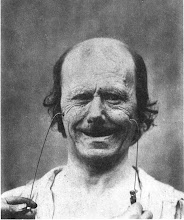
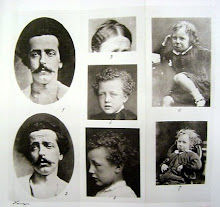
I read the Autobiography and the Voyage of the Beagle many years ago and I have "read at" Origin, Descent and Expression of Emotions of Man and Animals. This last, the Expression of Emotions, I think is still important even with all the recent research.

Darwin wrote before the discovery of genes. Although he was a contemporary of Gregor Mendel, Mendel's work was lost until the 20th Century (Mendel was an abbot and his successor burned his papers). Somehow, even before genes and long before the human genome project, he managed to get it right.

What a great century the 19th Century was! Except for the United States and the Civil War, it was one of the more peaceful centuries. Inflation was low. And it produced Darwin, Freud and Marx. Of these three, I think Darwin has best survived modern discoveries, but it is quite an impressive collection.

To me the towering genius of the last thousand years is Tolstoy and he came out of the 19th Century, but Tolstoy was not writing science, so he was less likely become obsolete than Darwin.

I love the Darwin-Wallace story. I suspect I would like Wallace more than Darwin; not as stuffy, I'd guess. And more mod est on the struggle for scientific recognition. More likely to go native. More socialistic.

But I also like a detail guy and Darwin was sure one for details. And all these years later, even if the subject is vegetable mold, he is a delight to read.

When Austin was in High School at St. Joseph's, he was hoping to get a rise out of the Brothers by putting one of those Darwin Fishes on his car. I told him, "Fine, but read the Autobiography first, so if someone asks you about it, you won't be stump ignorant." I think it had a civilizing affect on the boy. If reading Darwin will temper male adolescence, what other cures might be in store.

Happy birthday, Charles Darwin and here's to the next 200 years.


Saturday, November 8, 2008

Election tropes

Only because of victory, the election now seems good to me. Memory is a crazy woman that hoards colored rags and throws away food. (metaphor) 

The Republican ticket had begun to sound like two skeletons copulating on a corrugated tin roof. (simile)  

And especially to Bush, I say Take thy face hence. (synedoche)  

With Bush bombing Iraq and Afghanistan and the suits on Wall Street walking off with everyone's 401K's the results of the election were a no-brainer. (metonymy).  

Is Mr. Bush a Christian? Christians believe in the prophets, peace be upon them. Bush believes in profits and how to get a piece of them. HIs policies are sound, nothing but sound. (antanaclasis).

When Bush spoke to us he raised neither his voice nor our hopes. He should have fixed the problems, not the blame. Now we hold our breath and the door for his exit. (syllepsis).  

I've been Republicaned all I can stand this election year. The whole country has been punked by this administration. And thus, until the change of administration, the native hue of resolution Is sicklied o'er with the pale cast of thought. (anthimeria).

How did we win? The big man upstairs must have heard our prayers. This socialism attack on Obama was misplaced. Just as was once said to Dan Quayle, "Senator, you're no Jack Kennedy," we can say to Barack Obama, "Senator, you're no Eugene Debs." Would that he were. (periphrasis).

These last months of a Bush administration may be brutal.  He forgets:  Forests are the lungs of our land, purifying the air and giving fresh strength to our people. (prosopesis)

There did not seem to be brains enough in the oval office, so to speak, to bait a fishhook with. After the market fell and unemployment climbed, people moved slowly. There was no hurry, for there was nowhere to go, nothing to buy and no money to buy it with, nothing to see outside the boundaries of our own neighborhoods.  (hyperbole).

Bush has left the nation somewhat worse for wear.  During his administration, I saw Lady Liberty flayed, and you will hardly believe how much it altered her physical appearance.  (litotes)

What could the Republicans have been thinking?  Have we not eyes? have we not hands, organs, dimensions, senses, affections, passions? If you prick us, do we not bleed? if you tickle us, do we not laugh? if you poison us, do we not die? And if you wrong us, shall we not revenge? (rhetorical question).

And so they brought us more wars. And our young people learned proud privileges as were learned by a young man of an earlier generation: "By Spring, if God was good, all the proud privileges of trench lice, mustard gas, spattered brains, punctured lungs, ripped guts, asphyxiation, mud and gangrene might be his." (irony)

Strong gongs groaning as the guns boom far. My days have crackled and gone up in smoke. (onomatopoeia)

O miserable abundance. O beggarly riches. (oxymoron)

They led the people by following the mob. They lied to tell their truth. (paradox)

Friday, November 7, 2008

Election schemes

Readers true, friends: (apposition). 

Finally the election is over--a fair field full of fury. (alliteration).

The Republicans now suffer, but we also rejoice in our sufferings, because we know that suffering produces perseverance; perseverance, character; and character, hope. And hope does not disappoint us. (anadiplosis).

And now for some fairness in society:  I say, don't hold back. Strike as I would. Have struck those tyrants! Strike deep as my curse!  Strike! and but once (anaphora).

How the last eight years have seemed to me:  The helmsman steered; the ship moved on; yet never a breeze up blew. (anastrophe).

All those who are merciful with the cruel will come to be cruel to the merciful. (antimetabole).

Response to paliniacs: Not that I loved Caesar less', but that I loved Rome more. (antithesis).

Now they seek That solitude which suits abstruser musings. (assonance).

We must... hold them, as we hold the rest of mankind, Enemies in War, in Peace Friends. (asyndeton, chiamus)

May we find all of this Republicanism ...Lost, vaded, broken, dead within an hour. (climax- the noun, not the verb).

Republicans leaving DC: What is Hecuba to him, or he to Hecuba? (epanalepsis).

Where affections bear rule, there reason is subdued, honesty is subdued, good will is subdued, and all things else that withstand evil, for ever are subdued. (epistrophe).

To the rovians and paliniacs: Bloody thou art; bloody will be thy end. (hyperbaton).

And the louder they talked of their honor, the faster we counted our spoons. (isocolon).

When you are right you cannot be too radical; when you are wrong, you cannot be too conservative. (parallelism).

I’ve had to resist and to attack sometimes – that’s only one way of resisting – without counting the exact cost, according to the demands of such sort of life as I had blundered into. (parenthesis)

By dint of railing at idiots, one runs the risk of becoming idiotic oneself. (polyptoton)

I spent several days and nights in early November with an ailing pig and I feel driven to account for this stretch of time more particularly since the pig died at last, and I lived, and things might easily have gone the other way round and none left to do the accounting. (polysendeton).