Showing posts with label Pax Christi. Show all posts

Wednesday, April 30, 2008

Civilian Deaths in Aerial Bombing

Pax Christi is meeting next week to decide whether we will have a gathering this summer called 2008 Hiroshima Day.

One stated purpose last year's gathering was to "recognize the terrible consequences of war."

Three planes flew toward southern Japan from Tinian, an island in the west Pacific Ocean, for 6 hours on August 6, 1945. One was an instrumentation plane, one was a photographer's plane and the third was the Enola Gay, named after the group commander Colonel Tibbet's mother. On the Enola Gay was a gravity bomb named "Little Boy" armed with 130 pounds of uranium.

Japanese early alert radar had picked up the planes about an hour before the bomb fell at 8:15 in the morning, but since there were only three planes, the alert was lifted. The Japanese had decided not to intercept such small formations to save fuel.

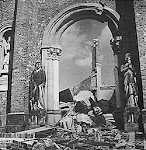
The bomb fell nearly a minute before exploding about 1900 feet above the city. A radius of a mile was completely destroyed and a radius of four miles was burned up. The immediate death toll was 70,000 people. Estimates of the number of dead by the end of the year 1945 were 90,000 to 140,000. Within 5 years the death toll most likely reached 200,000. About 20,000 of the dead were Korean's conscripted into forced labor in Japan. There were also prisoners of war.

Legal challenges to the bombing have largely been based on the targeting of civilians, most of the people killed in Hiroshima. Treaties from the Hague beginning in the early 20th Century attempted to limit civilian deaths.

Aerial bombing was considered so horrific it was banned even before it was invented. The Hague Convention of 1899 stated: "The Contracting Powers agree to prohibit, for a term of five years, the launching of projectiles and explosives from balloons, or by other new methods of a similar nature."

In 1923 a Draft Treaty on Aerial Bombardment was supported by the United States including the following language:

The bombardment of cities, towns, villages, dwellings or buildings not in the immediate neighborhood of the operations of land forces is prohibited. In cases where [military targets] are so situated, that they cannot be bombarded without the indiscriminate bombardment of the civilian population, the aircraft must abstain from bombardment.
Now this language seems old-fashioned. We are accustomed to aerial bombardment of civilians. But the early treaties and conventions largely reflected a convention that there could be no moral justification for bombing civilians.

Bomber pilots seem to sometimes wind up being those most eloquently opposed to war: Joseph Heller, Howard Zinn, and George McGovern, for instance. Kurt Vonnegut had the vantage point of being a prisoner of war in Dresden when it was firebombed by the Allies.

Even with the new, supposed precision bombing, civilians are overwhelming the victims in modern warfare. A group called iraqbodycount.org has measured civilian deaths in Iraq since early 2003. These are only civilians; deaths in combat are not counted. Today's numbers are 83,221-90,782.

Sunday, April 27, 2008

Texas, Bloody Texas. Cameron, Bloody Cameron.

Texas had 60% of the death penalties in the country in 2007. Of the 42 executions in the nation, 26 were in Texas. The next two highest states were Louisiana and Oklahoma, with 3 each. It is as if the proximity to Texas increased the numbers.

David Dow, a law teacher at the University of Houston believes the other states will continue to decline and soon Texas will have all the executions in the United States:

“The reason that Texas will end up monopolizing executions,” he said, “is because every other state will eliminate it de jure, as New Jersey did, or de facto, as other states have.”

The last man killed in Texas was Michael Richard. On September 25, the Supreme Court accepted a review of death by lethal injection in Baze v. Rees. That same day, Richard's lawyers came rushing in with a stay of execution a few minutes after 5:00 p.m. Presiding Judge Sharon Keller instructed the clerks, without consulting the other judges, to refuse the filing. That same evening Richard was executed.

In an Austin-American Statesman article, the judge in charge of the case Cheryl Johnson was quoted as saying her reaction was "utter dismay."

"And I was angry," she said. "If I'm in charge of the execution, I ought to have known about those things, and I ought to have been asked whether I was willing to stay late and accept those filings."

Overall, though, the number of executions are declining. And there is hope there will be fewer in Texas sent to death row because Life Without Parole is now available.

When Texas passed life without parole in 2005, it was already available in 47 states. Senator Eddie Lucio deserves the credit for its passage. Sen. Lucio sponsored the bill and was its primary moving force in the Senate. Gov. Perry signed it. Pax Christi members are grateful to Sen. Lucio for his support of the bill. We don't know if it would help him or hurt him to have our support, so we will leave that decision to him. I believe he has saved about 15 lives a year as a result of the change, and may begin to change Texas' reputation for being the most blood-thirsty of states.

As well as I can count by the numbers currently on death row are trending as follows:

2002 33
2003 28
2004 23
2005 15
2006 11
2007 15
2008 1 (to date)

The life without parole option is of course not the only factor in reducing the death penalty. DNA exonerations are also important. In 2001 Governor Rick Perry declared a legislative emergency after he pardoned a man who had served 15 years after being wrongfully convicted of rape. He fast-tracked a bill that allowed convicts to get state-funded DNA tests if biological evidence was available and they could show that ere was a reasonable chance of exoneration.

Of the first 32 tested in Dallas County, 12 were exonerated. On April 15, Dallas County announced its 16th exoneration. Even the Dallas Morning News, after a century of supporting the death penalty, declared that it doubted that Texas could guarantee "that every inmate it executes is truly guilty of murder."

In modern times, Cameron County has sent at least 6 people to their deaths by execution. One had never been to prison before, was identified, not at trial, but in a dying identification from a photograph. His last words: I am an innocent man, and something very wrong is taking place tonight. May God bless you all. I am ready.

Saturday, April 26, 2008

The Peace Bishop

So who are these people, the Pax Christi? I first ran into them in the early 80's and they were people completely outside of my experience.

I was a backslid Baptist and had no interest whatsoever in self-sacrifice for any purpose. These people seemed to waltz into prison without a second thought. And not even for some risk that might have brought a shot at some big bucks. Incredible.

There didn't seem to be very many of them. I supposed going to prison for religious reasons tended to winnow those few pieces of weighty grain from all the rest of us light little pieces of chaff the wind could blow away.

For me, Bishop John Fitzpatrick was the center of it all. He was the Bishop in Brownsville from 1971 until 1991 and I bumped into him only rarely, at a restaurant or a meeting. I wish I could report I felt some type of religious awe, but in those days (and maybe now) my religious awe receptors were blunted. I felt a different type of awe. The type of awe I felt around dangerous people: Billy Jack the junior high school bully, biker friends of my brother in Austin, the antiquities smuggler from Mexico, the reputed hit-man from up the Valley.

For one thing, he scared me because he was unafraid of a federal judge.

The Bishop and the Federal Judge were in a head to head dispute. The Federal Judge was a devout Catholic and was standing on THE LAW. The Bishop, GOD'S LAW.

The faithful, including the director of Casa Romero, were helping refugees from El Salvador. They were "transporting" refugees in violation of federal criminal law. So they were being prosecuted.

This is how the Fifth Circuit describes the Bishops position:
Bishop John Fitzpatrick, Bishop of the Roman Catholic Diocese of Brownsville, testified that meeting material human needs represents an essential aspect of Christianity, and that each individual remains free to fulfill this obligation according to the directives of his or her own conscience. Although no law of the Roman Catholic Church specifically requires Roman Catholics to provide sanctuary or rides to Salvadorans, Bishop Fitzpatrick believes that providing such assistance constitutes an appropriate expression of the Christian gospel.
I was, in those days, still trying to be a good lawyer which I thought meant supporting THE LAW. But in this dispute I knew that the Bishop was expressing one of those self-evident truths. You, know, that thing about being created equal and endowed by our Creator with those inalienable rights. So, I knew the Bishop was right and the Judge was wrong. This from a backslid Baptist.

Of course, though when the law and God's law come into conflict, people of conscience go to prison. This was the Pax Christi.

So who are these Pax Christi? They support
"Christian nonviolence on the personal, communal, national and international levels...nuclear, conventional and domestic disarmament, an end to the international arms trade, economic conversion to a non-military economy, conscientious objection, and nonviolent alternatives to war...the struggle against economic injustice, militarism, and environmental destruction which are particularly harmful to those who are poor, minorities, children, and women...and universal human rights, both at home and abroad, through solidarity with oppressed and marginalized people struggling for dignity."

The group was formed just after World War II when German and French Catholics met to discuss the senselessness of having killed each other by the millions in just a few years. It came to the United States in 1972.

OK, how did that fit me? Well, first I wasn't religious and second I hadn't exactly been a pacifist. It is true, I had opposed the Viet Nam war, but this conviction only came after I drew a number 53 in the draft lottery, pretty well assuring if the war didn't end, I'd be draft. (It did. I wasn't.) Before I drew my lottery number I favored stopping the dominoes and I expressed the certainty that, "Some things are worth fighting for." (Yes, even the grammar was bad).

And not being a pacifist, although I had the courage for the occasional fist fight in High School, I certainly didn't have the courage to stand up to a federal judge as a lawyer. So before the Pax Christi Bishop and the Pax Christi members, I stood in dread and wonder.

I haven't gotten much braver as the years have passed, but I have come to the view this fearless, small group are right about most everything. Kathy and I converted to Catholicism. And now, when I have money for dues, I join to get the newsletters and to the extent my faint-heartedness permits, I participate.


Tuesday, March 25, 2008

Jail house blues: If voting won't help much, what can we do?

So why didn't the slaves just vote themselves freedom? Well, OK, they weren't allowed to vote and there were other problems like this original provision of the U.S. Constitution:

No Person held to Service or Labour in one State, under the Laws thereof, escaping into another, shall, in Consequence of any Law or Regulation therein, be discharged from such Service or Labour, but shall be delivered up on Claim of the Party to whom such Service or Labour may be due.

In other words, if you run away, we track you down and bring you back.

Sound familiar? Now ask why we cannot just elect different county commissioners and sheriff and improve jail conditions?

Inmates, like slaves, cannot vote and if they run away we track them down and bring them back. Even very democratic rule (which we do not have) may leave a despised minority without rights and with harsh treatment. Comments on earlier blog posts have discussed the hatred engendered by being gay, socialist or atheist. Imagine being an inmate.

This is one problem (among many more) that cannot be voted away.

I urge ideas from everywhere; community organization is not my strength. Nonetheless, here are some things that occur to me may be started locally or encouraged statewide that may make a difference:

1. Jailers--they hold the key.
a. Organize jailers and increase their pay and education.
b. Make jailers a profession with a code of ethics and a risk of loss of license for ethical violations.
c. Within the code of ethics require reporting of inmate abuse or other violations of minimum standards.
d. Give jailers civil service protection to require due process so they will not be punished for reporting violations.
e. Make sure many jailers have paramedic training like firefighters.
f. Encourage social work, psychology educations for jailers.
How can this be done? Some trade unions may be interested. AFSCME, maybe. I understand the weaknesses of trade unions as opposed to industrial unions, but the trade unions at least are still alive.

Jailers attended the Pax Christi meeting on jail conditions and some of the candidates were either past or present jailers. Encouraging at least some support group to begin to wield some influence. Jailers and their families, unlike most inmates, can vote.

2. Organize inmate families. The extent of the damage done to families, jail house widows and orphans, is difficult to overstate. Often if people who have a son, husband, brother in jail they are embarrassed for themselves or loved ones and keep it a secret. Protests including children were historically what first began to give ML King a measure of success. Families Against Mandatory Minimums is one organization and I know there is a local organization as well.

3. Seek help from religious groups to promote these issues. Valley Interfaith may be interested. Scripture certainly supports a jail ministry. Church members can also vote.

4. Educate the inmates. Copies of forms for Federal Tort Claims Act complaints should help the federal prisoners. Copies of the Jail Commission Standards. Case law summary on 8th Amendment protections. International human rights treaties to which the U.S. is a signatory. All in Spanish.

5. Opening of the jail to education, ministry and the press (including photographs). All of these are restricted and inadequate. These restrictions are made on the basis of arguing security risks.

Of course, to an extent this is true. Anytime anyone is allowed into a jail facility there is at least a theoretical risk of introducing contraband. Anytime anyone or anything is allowed out of a jail, there is a risk of introducing information that would allow an escape, riot or introduction of contraband. So everything that humanizes the jail and makes it otherwise function such as family visits, jail ministries, bringing in and taking out of supplies, mail, books, art, GED training, AA, lawyer visits, foreign consul visits, probation and parole officer visits, shift changes in jail employees, medical visits, contact with one another, creates a security risk. Especially if that risk involves some political heat or extra expense, and sometimes only because of the political heat and extra expense, using security as a pretext, the first reaction seems to be to exclude the risk rather than increase the security.

However, prisoners cannot be kept sealed air tight plastic wraps. And to the extent extra security requires more personnel and equipment to conduct searches and examinations of the people and things going in and out of the jail, this is simply part of the basic required expense of the jail, just like bars and walls.

6. Involve the Mexican Consul. The folks there want to help and have intervened on behalf of individual clients. They also seem to be able to get in for visits.

7. The county could hire an inmate ombudsman and allow that person full access. Talk to the commissioners about this. Sen. Lucio and the State Reps Oliveira, Lucio and Rios Ybarra (elect) could promote this on a statewide basis.

8. Website support: Post inmate complaints and medical information on a website (redacting inmate names to protect privacy). Post personnel information about jail employees on a website, including salaries and sanctions (again, redacting names). Post jail populations in the different facilities. Post numbers of inmates in different facilities and compare with maximum capacity in that facility. Give locations as to facility of inmates. Family members and lawyers would be able to find the inmate and the jail would be less likely to lose one or overstay the end of the sentence. Post judgments with sentencing in connection with the inmate. (This is also public information already). Post name of medical personnel on duty. Status of other jail systems such as life safety rules, something we only hear about in after a tragedy, should be publicly posted. The jail commission standards require each jail to have extensive plans regarding many areas of standards and these should be posted as well.

9. Ask Sen. Lucio and State Reps. Oliveira, Lucio, (and now) Rios Ybarra to give someone authority to enforce the Minimum Jail Standards--the DA, Attorney General, or maybe a standing special enforcement agency for jails. Our commentators from yesterday discuss the strictness of the TCJS, but after reports of violations are issued, it seems there is little pressure for change. Variances appear to be readily granted. I may be mistaken about this, but it is how things appear to me as an outsider. Also, a statewide agency is unfit to oversee daily and micro local jail problems. There is a particular regulation dealing with our famous toilet paper issue:

RULE §277.5 Toilet Paper: Toilet paper shall be available at all times.

How is a state agency without a local staff, supposed to oversee this, for instance?

10. The minimum jail standards themselves may not meet constitutional muster and if they are treated as an aspirational standard for the jails, rather than a true minimum standard, unless the jail standards are improved, unconstitutional jails will be guaranteed. The chapter of the minimum jail standards that applies to education and rehab programs does not address religious exercise and I cannot find it otherwise. Inmates, including convicts in prison, must still be provided some access to the Free Exercise of Religion. The jail standards themselves may require revision.

And then, when all else fails, or at least to augment everything else, the Civil Rights Acts of 1866 were codified in 42 USC Section 1988 helped end the other kind of slavery. Our "evolving sense of decency" has not evolved yet to the point where we may expect the abolition of jails. But maybe we can agree decency must include mattresses, soap and toilet paper.