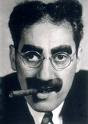
I listened to it so many times, I committed it to memory. I must have been only five or six years of age, because we did not visit as much after that. When I was in Junior High School, I entered poetry reading contests and used this poem, long since memorized.
In college, I killed a couple of otherwise pleasant evening by deciding someone might enjoy hearing me recite the poem.
It was an odd thing this love my grandmother had for Kipling. She, the hater of the English and all things English and he, the poet of English Empire. Or at least that was how we generally viewed him.
He had written Ulster 1912, anti-Irish home rule, anti-Catholic.
But I doubt that he was always the imperialist. Maybe it is reading through eyes that want to see the world rose colored, but those Empire poems seemed anti-imperialistic to me.
In one of the odd turns in my life I took a graduate course in Portuguese studying the epic poem of Portugal, Os Lusiados, by Luis Camoes. This was the great imperialist poem of Portugal that sounded to me to be anti-imperialist. And then, I think the Iliad is anti-war. I thought Patton was an anti-war movie. I saw Natural Born Killers as a comedy. So I know my judgment on these things is hardly to be trusted.
The White Man's Burden is supposed to be an appeal to the United States to colonize the Philippines. I have never been able to view as "an appeal" the following lines:
Send forth the best ye breed--
Go bind your sons to exile
To serve your captives' need;
To wait in heavy harness....
Go bind your sons to exile
To serve your captives' need;
To wait in heavy harness....
Nor have I ever been able to read the Recessional as favoring Empire, but more as a caution against it:
Far-called, our navies melt away;
On dune and headland sinks the fire:
Lo, all our pomp of yesterday
Is one with Nineveh and Tyre!
Judge of the Nations, spare us yet,
Lest we forget - lest we forget!
On dune and headland sinks the fire:
Lo, all our pomp of yesterday
Is one with Nineveh and Tyre!
Judge of the Nations, spare us yet,
Lest we forget - lest we forget!
His background, to me, would more likely produce a critic of Empire than an imperialist. He was born in Bombay, India and during his happy early days was raised by the Portuguese Nanny and the Hindu Meeta who taught him the stories that became the basis for his later Jungle Books. When he was later shipped off to English boarding, he was miserable.
In general, people who are exposed to foreign peoples, tend to have their sense of white superiority tempered by a dose of experience. Luis Camoes was one. I think, also, of the contrast between Charles Darwin and Alfred Russel Wallace.
Kipling was awarded and accepted the Nobel Prize. He refused both knighthood and offers to be Poet Laureate of England. Not, to me, a sign of an ambitious imperialist.
It seems to me the death of his son at war in 1915 would have made him anti-war (which means anti-empire) if he were not so before. Teddy Roosevelt had a similar shift when his son died at war. I would imagine that it is hard to stay jingo when the big sacrifice is made. Of course, modern imperialists do not seem to make the foolish mistake of sending their own children (first twins Jenna and Barbara, for instance) to risk death.
EPITAPHS OF THE WAR, 1914-1918
An Only Son
I have slain none except my Mother. She
(Blessing her slayer) died of grief for me.
COMMON FORM
If any question why we died,
Tell them, because our fathers lied.
A DEAD STATESMAN
I could not dig: I dared not rob:
Therefore I lied to please the mob.
Now all my lies are proved untrue
And I must face the men I slew.
What tale shall serve me here among
Mine angry and defrauded young?
An Only Son
I have slain none except my Mother. She
(Blessing her slayer) died of grief for me.
COMMON FORM
If any question why we died,
Tell them, because our fathers lied.
A DEAD STATESMAN
I could not dig: I dared not rob:
Therefore I lied to please the mob.
Now all my lies are proved untrue
And I must face the men I slew.
What tale shall serve me here among
Mine angry and defrauded young?
Does this sound like an imperialist to you?













_-_Dante_And_Virgil_In_Hell_(1850).jpg)