Showing posts with label Hobbes. Show all posts

Saturday, November 12, 2011

Apologizing to Hobbes


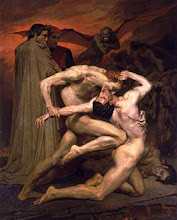
Maybe I owe Thomas Hobbes an apology. All these years I thought he was just a propagandist for Charles II. I thought Hobbes was wrong about human nature. He insisted we needed a strong government, a Leviathan, to control man's evil nature. Without this strong government, we would be in constant fear, in danger of violent death, "and the life of man, solitary, poor, nasty, brutish, and short."


This is not what I have concluded of human nature with some 35 years of talking to folks in jails, prisons, and mental hospitals. Or those people on the outside who are largely indistinguishable from those on the inside. I have tended to the argument of Rousseau that "nothing can be more gentle than man in his primitive state...." And of Kropotkin, that the natural state of man (without the Leviathan) is one of mutual aid. Differently put, people, unless society locks them in cages together like rats in a small pen, do a pretty good job of getting along. They help each other because the cooperative groups are more likely to survive. Until we have been damaged, we don't have a desire to damage other people.


I am not ready to jettison this view of human nature. But I have been reading a book by Steven Pinker that argues that when Hobbes was asking to for strong government, he had his reasons, and a good argument apart from trying to please a young king. Pinker proves quite convincingly that without strong government, in history, rates of murder have been higher. Much higher. Not uncommonly, a hundred times higher.


No wonder Hobbes was born as twins with "fear." No wonder, he wanted someone, even a silly, hedonistic Merrie Monarch, with the power to stop the violence.


Pinker has published "The Better Angels of Our Nature: Why Violence Has Declined." He compares murder rates throughout the existence of our species. He looks at the level of homicides during anarchy of the hunting, gathering, and horticultural societies. He argues a five-fold decrease in murders in moving into agricultural societies. In the move from feudal territories to kingdoms, he argues a ten-fold to fifty-fold decline in the murder rates. Since World War II, he argues we have moved into a New Peace and a time of fewer civl wars, genocides, repressions by autocratic governments and terrorist attacks.


Oh Thomas, I'll be more patient with you in the future.

Sunday, April 20, 2008

On Hobbes and Kropotkin

Maybe the political world is divided into a Hobbes-Kropotkin split when judging human nature.

Hobbes thought there would always be shortage of resources so a war of all against all would make life "solitary, poor, nasty, brutish, and short."

Kropotkin said mutual aid between members of a species, including people, would give to life "the possibility of attaining old age and of accumulating experience, the higher intellectual development, and the further growth of sociable habits, secure the maintenance of the species, its extension, and its further progressive evolution."

If you see people as Hobbes does, a lot of laws and force are needed to reign in the anarchy.

If you see people as Kropotkin does, society needs to leave people alone and things will be all right.

I loved reading the Leviathan. That old-time English warms me. And it has been a while, but what I remember is a curious journey from Adam to monarchy and why God led in that way.

Mutual Aid, though, seems to better describe the world I see.

And the Bible seems to be more of a warning against monarchy to me than an endorsement.

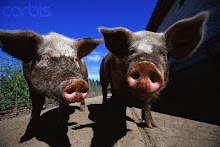
"When Adam wove and Eve span, where was then the Gentleman?" This would be a starting point for me and then the warnings of Samuel, "If you take a king, he'll take your sons and make them drive war chariots, take your daughters and make them make perfume, take your land, take your money." And then, of course, Jesus. The Sermon on the Mount. The pun on "legion" for the swine being driven off the cliff.

I know people often do awful, nasty things to each other. But I think society engineers much of that evil. Racism, for instance. Slavery had to be enforced by laws and force. After slavery was gone, it took Jim Crow Laws and Anti-miscegenation laws to keep races apart.

Little kids play with each other without noticing race. And without laws, romance comes along without much concern for racial differences.

Distribution of wealth would be much more nearly equal if laws did not support the protection of accumulation of wealth with corporations, inheritance laws, and the like.

Most crime that I see comes from poverty or at least inequality of wealth that causes envy.

Inmates who are completely incapable of functioning in society seem to have no trouble organizing and running in an orderly manner 12-step meetings, Big Book and all.

I have probably gotten to know people in jail about as well as I know people out of jail: there really isn't much difference.