So is she really in pain or is she faking. After the car wreck, she complains of pain. Her doctor says she is hurt. The insurance company's doctor says, no, the wreck wasn't bad enough and she is only pretending to be hurt.
There are sometimes objective findings like muscle spasms or herniated discs or even broken bones, but a lot of the claim depends on whether or not the complaints of the patient are true.
Then there is the other side of the story. The employee who fell at home in the bathroom, but won't admit to being hurt for fear of losing the job. The athlete who denies an injury.
So, once we develop these face reading skills, can we tell who is in pain and who isn't? I think I can see pain in a client's face. (Yes, yes, Kathy, I know I think I can do anything, but I am really just full of......) I look at their eyes and if the muscle around the eyes are contracted (These as we will discover are the orbicularis oculi.) and there is extra moisture in the eyes, they are really in pain. Of course, I have no ideas whether this scientific approach produces false positives or false negatives, but I do think if I see it, a jury sees it also and will agree with me the person is hurt. For a long time, this is how I have picked the cases I want to try, regardless of what the medical records say.
My main sources on reading faces deal mainly with acute pain and so they describe a stronger reaction.
Darwin starts with animals and notes the writhing around "with frightful contortions" and "piercing cries or groans." Almost every muscle is brought into action and "with man the mouth may be closely compressed" or with lips retracted and teeth clenched or ground together. Like the "gnashing of teeth" in hell.
The eyes stare wildly, the brows are heavily contracted, perspiration bathes the body and drops trickle down the face, the nostrils are dilated and often quiver, and the breath is held until the blood stagnates in the purple face. Pain starts as stimulate and excites to action, but if severe, soon induces extreme depression or prostration. So says Darwin.
My face artist, Faigin, breaks the face down into parts.
Eyebrows: The entire brow is lowered, especially the inner corner which is sharply downward. There is a roll of skin piles up above the eyebrows (The action of the corrugator muscle).
Eyes: The eyes are reduced to a single line by the compression of the orbicularis oculi. The stronger the action, the straighter the line Faigin draws to show the eye.
Mouth: Either opened in a clenched-teeth grimace or opened in a shout. The upper lip is stretched upward and outward. (Action of the risorius/platysma and levator labii superioris).
Signature Wrinkles: Crowsfeet with the lower lid folded, star-wrinkles from the inner eye, vertical lines between the brows and a joined crease from nose to chin.
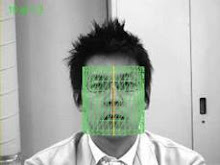
The face scientists with their FACS testing say the bulk of the information about pain conveyed by facial expr4ession is represented by 4 actions: brow lowering, orbit tightening, levator contraction and eye closure. (The levators are on the sides of the nose in three different branches under the eye orbits).
Facial expressions can be used to measure pain in infants and senile patients who cannot express themselves.
The scientists also find different face muscles involved with different types of pain: electric shock, cold, pressure and pain resulting from cutting off of the blood to a nerve.
The scientists took a bunch of back patients and then manipulated the leg to make them hurt so they could observe pain. They also told them to fake a facial display of pain. The patients could mask or hide pain and they could voluntarily make painful expressions that "tended not to differ qualitatively from the genuine display but was more vivid or intense."
Faked pain expressions were much like genuine pain, but they were more extreme and had the added factor of AU12, the lower lip pull, in which the lower lip corners are pulled back and upward. Genuine pain tended to blink more than faked pain. When trying to mask pain, the patients could disguise all of the symptoms except AU7, the tightening of the eyelids, narrowing the eye opening.
The hardest part to fake the pain or hide the pain is, then, in the eyes.
Showing posts with label Gary Faigin. Show all posts
Showing posts with label Gary Faigin. Show all posts
Wednesday, April 23, 2008


Monday, April 14, 2008
Smile and the World Smiles With You
Artists, including cartoonists, know about face muscles. Leonardo da Vinci and Michelangelo both did autopsies. Leonardo did thirty; thirty faces cut up to see how the muscles work.
The Artist's Complete Guide to Facial Expression by Gary Faigin lists eleven muscles of the face that are responsible for facial expression. Faigin gives six basic facial expressions: sadness, anger, joy, fear, disgust and surprise and then teaches how to draw them based on the actions of the underlying muscles.
The simplest, the smile muscle, the zygomatic major has a fixed end attached to the zygomatic arch and a free end attached to the corner of the mouth. Tightening a muscle and pulling the free end toward the fixed end creates a smile.
It becomes more complicated when combined with different brow positions: smile + lowered brow=sly; smile+raised brow=eager; smile + fearful brow=ingratiating; smile + sad brow= happy/sad. Each different brow position has different muscle movements.
Paul Ekman, the scientist who developed the Facial Action Coding Systems (FACS) identifies basically the same six emotions as Faigin, but adds contempt.
Ekman describes the zygomatic major as the Lip Corner Puller and labels it AU12. "Felt smiles" are those that involve the outer portion of the muscle orbicularis oculi, AU6, the Cheek Raiser.
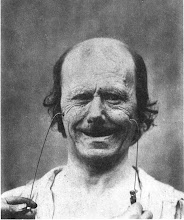
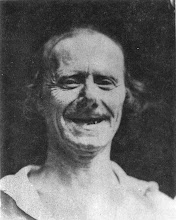
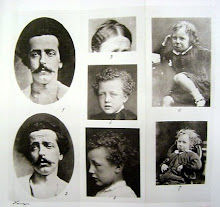
This "felt smile" or "genuine smile" is also called the "Duchenne smile" after a French Neurologist who put electric shocks into people's faces and photographed them to find out how the muscles effect the face. Some muscles are voluntarily exercised (the Lip Corner Puller), some are not (the Cheek Raiser).
Neonates have a Duchenne smile.
We can fake a smiling mouth, but not smiling eyes:
Now do we get to figure out who the liars are? Ekman concludes, "Some people can indeed detect the differences between different kinds of smiles. We still do not know if training can improve accuracy in distinguishing liars from truth-tellers." So, if we get good enough, I guess, at spotting false smiles from true smiles, we will become human lie detectors?
Wait. Wait. Wait, Dr. Ekman.
Two big problems come immediately to mind. I'm sure there are more. One: the Halley smiling for the camera problem, and Two: the Josh Karton doing Stanislavski problem.
When she was about eight, Halley went on a trip with me. As part of our trip celebration we had a black and white photograph taken. Halley smiled for the camera: zygomatic smile. She didn't show "frank joy," but she wasn't trying to fool anyone. She was just a little girl posing for her picture.
Sometimes we want to smile as a greeting or because others are happy and we don't want to ruin the party. Sometimes we smile to put on a good face for a sad or sick friend. In fact, we are told smiling is a good thing. See, http://www.quotegarden.com/smiles.html.
It can even be tactical: "The robbed that smiles, steals something from the thief."
But the zygomatic smile does not always mean a lie. It can be a false positive for lying.
Problem two is the Josh Karton problem. My acting teacher for about twenty years. (I'm not an actor, so this is a whole different story). Josh uses the "system" of Constantin Sergeyevich Stanislavski. When he expresses joy, he feels joy. He uses his own memories to naturally express emotions.
I have not noticed Josh's orbicularis oculi when he smiles, but I'll bet he can feel joy no matter what he is saying.
The Duchenne smile does not always mean the truth. It can be a false negative for lying.
The Artist's Complete Guide to Facial Expression by Gary Faigin lists eleven muscles of the face that are responsible for facial expression. Faigin gives six basic facial expressions: sadness, anger, joy, fear, disgust and surprise and then teaches how to draw them based on the actions of the underlying muscles.
The simplest, the smile muscle, the zygomatic major has a fixed end attached to the zygomatic arch and a free end attached to the corner of the mouth. Tightening a muscle and pulling the free end toward the fixed end creates a smile.
It becomes more complicated when combined with different brow positions: smile + lowered brow=sly; smile+raised brow=eager; smile + fearful brow=ingratiating; smile + sad brow= happy/sad. Each different brow position has different muscle movements.
Paul Ekman, the scientist who developed the Facial Action Coding Systems (FACS) identifies basically the same six emotions as Faigin, but adds contempt.
Ekman describes the zygomatic major as the Lip Corner Puller and labels it AU12. "Felt smiles" are those that involve the outer portion of the muscle orbicularis oculi, AU6, the Cheek Raiser.
This "felt smile" or "genuine smile" is also called the "Duchenne smile" after a French Neurologist who put electric shocks into people's faces and photographed them to find out how the muscles effect the face. Some muscles are voluntarily exercised (the Lip Corner Puller), some are not (the Cheek Raiser).
Neonates have a Duchenne smile.
We can fake a smiling mouth, but not smiling eyes:
The emotion of frank joy is expressed on the face by the combinedDarwin used Duchenne's photographs in the development of his arguments about how emotions are expressed in the face.
contraction of the zygomaticus major muscle and the orbicularis
oculi. The first obeys the will but the second is only put in play by
the sweet emotions of the soul; t h e . . , fake joy, the deceitful laugh,
cannot provoke the contraction of this latter muscle . . . . The muscle
around the eye does not obey the will; it is only brought into
play by a true feeling, by an agreeable emotion. Its inertia, in smiling, unmasks a false friend.
Now do we get to figure out who the liars are? Ekman concludes, "Some people can indeed detect the differences between different kinds of smiles. We still do not know if training can improve accuracy in distinguishing liars from truth-tellers." So, if we get good enough, I guess, at spotting false smiles from true smiles, we will become human lie detectors?
Wait. Wait. Wait, Dr. Ekman.
Two big problems come immediately to mind. I'm sure there are more. One: the Halley smiling for the camera problem, and Two: the Josh Karton doing Stanislavski problem.
When she was about eight, Halley went on a trip with me. As part of our trip celebration we had a black and white photograph taken. Halley smiled for the camera: zygomatic smile. She didn't show "frank joy," but she wasn't trying to fool anyone. She was just a little girl posing for her picture.
Sometimes we want to smile as a greeting or because others are happy and we don't want to ruin the party. Sometimes we smile to put on a good face for a sad or sick friend. In fact, we are told smiling is a good thing. See, http://www.quotegarden.com/smiles.html.
It can even be tactical: "The robbed that smiles, steals something from the thief."
But the zygomatic smile does not always mean a lie. It can be a false positive for lying.
Problem two is the Josh Karton problem. My acting teacher for about twenty years. (I'm not an actor, so this is a whole different story). Josh uses the "system" of Constantin Sergeyevich Stanislavski. When he expresses joy, he feels joy. He uses his own memories to naturally express emotions.
I have not noticed Josh's orbicularis oculi when he smiles, but I'll bet he can feel joy no matter what he is saying.
The Duchenne smile does not always mean the truth. It can be a false negative for lying.
Subscribe to:
Posts (Atom)







_-_Dante_And_Virgil_In_Hell_(1850).jpg)