Showing posts with label gardening. Show all posts

Tuesday, April 29, 2008

When All the World Dissolves

I recently read Faustian Economics: Hell Hath No Limits. This is an article by novelist Wendell Berry that appears in the May 2008 issue of Harper's Magazine. Berry says:
We seem to have come to a collective delusion of grandeur, insisting that all of us are “free” to be as conspicuously greedy and wasteful as the most corrupt of kings and queens. (Perhaps by devoting more and more of our already abused cropland to fuel production we will at last cure ourselves of obesity and become fashionably skeletal, hungry, but–thank God!–still driving.)
When I was in college my economics teacher, Clifton Grubbs, talked about what it would be like if gas were $5.00 per gallon. It was actually then about a quarter a gallon, so he was talking about an increase of twenty times the price. Even accounting for inflation, gas is more expensive than it was then. That quarter of a gallon gas would still be under $2.00 now, so the $3.50 or so we are paying at the pump is less than double, but a 75% increase.

Under Grubbs' scenario, gas would cost about $40.00 per gallon now. His idea was that if gas were really to pay for the costs involved in its use, including the clean up afterwards, prices would be this high.

If gas were this expensive, society would rapidly reorder itself. I have trouble imagining it but it seems, as a beginning, downtowns would become prime real estate and people would walk and ride bicycles more. Probably, also, whole other industries would come to a screeching halt: vacations, airlines, trucking. And then the industries that rely on those things would collapse such as hotels and grocery stores.

A friend made a trip to El Salvador last week. He has been traveling back and forth for most of the forty years he has lived in Brownsville and he tells me that with the price of corn and rice so high, conditions are dire. People are starving.

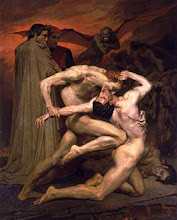
Berry in thinking of our predicament is brought back to Christopher Marlowe's Tragical History of Doctor Faustus: Berry describes the desire of Dr. Faustus, so much like our modern approach to control "all Nature's treasury," to "Ransack the ocean.../ And search all corners of the new found world..."

The warning is that where we have no limits, hell also becomes limitless.
Hell hath no limits, nor is circumscrib'd
In one self place; for where we are is hell,
And where hell is, there must we ever be:
And, to conclude, when all the world dissolves,
And every creature shall be purified,
All places shall be hell that are not heaven.
Berry is a farmer first and a writer second, so a local economy based on growing much of your own food does not intimidate him.

The distributists also are big on locally grown food on personally owned, mortgage-free land. With the price of grain spiking, it is easy to be held for ransom if you have no control over your own food.

Now my tomato plants have always died and I'm too fat to keep a garden comfortably. Do you suppose sloth and gluttony are kin? How about control of our food and control of our freedom?

Thursday, March 13, 2008

Life in the Fast Lane

Touring Downtown

Touring Downtown
Thanks H-E-B


HEB carts are an important means of transportation in our neighborhood. Kathy and I will sit on our balcony and watch the carts go by filled with kids or lawn care tools or personal effects--and sometimes even groceries.

There are other forms of transportation as well: a lot of walking, biking and motorized wheelchair driving from the high rise nursing home down the street. There are also cars, monster HEB grocery trucks that set off the neighbor's burglar alarms and skateboards. But the signature vehicle of the neighborhood has to be the HEB shopping cart.

I am not sure how you get one, but it is clear, when you are through with it you can leave it on the side of the street. Every day a guy with a pickup truck drives around and loads HEB carts into the truck which he apparently takes back to the store on Elizabeth Street.

At first there was no reason everyone could not leave the store with a cart, but now metal pilings have been driven in the ground to create a gate around the carts at the store. Someone told me (a clerk?, a customer?, a panhandler?) that I would have to pay a $5 deposit if I wanted one.

HEB appears to be out of character in its generosity in allowing the use of the carts. Maybe this is not true and there is cottage industry of threats and bullying surrounding the carts and who gets to use them and who brings them back. I have not tried, since both of our cars usually run and when mine doesn't, Kathy will sometimes let me borrow hers.

When I say the generosity would be out of character for HEB, I am aware that HEB advertises they give away turkeys and other food at Thanksgiving and Christmas and send food to Mexican orphanages. Good for them. But my impression of the company stems more from years of reports of mistreatment of employees and having customers arrested for shoplifting and fighting customers or employees who had the temerity to slip and fall on the premises. From nightmare experiences, HEB could strike fear in the hearts of some people just like other initials like CIA, KGB and IRS.

Charles Butt waged a political campaign to make sure no one could sue them. And pity the poor Lopez supermarket when an HEB came to the neighborhood.

I still shop there, of course. No principle of corporate bad citizenship is likely to overcome my desire for convenience and cheap groceries. Back in the day when I was trying to observe a boycott, I would sometimes eat grapes and lettuce and I readily hop on a Boeing manufactured jet and use DuPont and AT&T products although I rank those corporations with those that sold opium in China and colonized India. Anyway, I don't claim to be part of the solution as a consumer.

Grocery stores are notoriously difficult to unionize and as food delivery becomes more complex, food coops seem like romantic dreams. And every attempt I have made at a victory garden has failed, although I did enjoy the worms I got at the composting class. Alas, readers true, any thoughts about improving the way we get food?