Showing posts with label criminal law. Show all posts

Sunday, September 27, 2009

Thoughts About Free Will


The first exposure I had to the determinism-free will discussion was in elementary school when we attended the Calvary Baptist Church in McAllen, Texas. The argument was if God knows everything and is all-powerful, he knows ahead of time what we will do and he made us that way, so we can't really be making choices. Differently put, no one really chooses the next step in life if it has already been decided by an omnipotent, omniscient God.

As a little boy, intuitively, I thought I was making choices, but I also had a strong sense I was being tossed around by powers far greater than me.

Although Baptists tend to believe in Free Will, there has long been a Calvinist contingent among the Baptists:
"...the earliest Baptists were not Calvinists, even though they had their beginnings in a Calvinistic environment. It was a quarter of a century before Calvinist views appeared in Baptist life. Even then, for a considerable period of time there were two different groups of Baptists in England, General Baptists (non-Calvinistic) and Particular Baptists (Calvinistic). Later (1891) the two groups merged, but many congregations on both sides were suspicious of the merger and remained separate. In America, the first Baptist church (FBC of Providence, Rhode Island) had both Calvinists and non-Calvinists in its membership."

The big issue is whether God picked those who were going to hell and those going to heaven before birth.

We are long since Catholic converts, but that does not really resolve the issue, even though the Catechism now state,

"Man is rational and therefore like God; he is created with free will and is master over his acts."

The anti-Calvinist protestants accuse Calvin of having cribbed from the Catholic St. Augustine for a reliance on determinism. And The New Advent Catholic Encyclopedia (cited in the link) discusses the issue as far from settled. I discussed Pascal's falling out of favor with the powers of his day because of a Catholic belief in determinism.

Mostly now, people talk about biological and psychological determinism, but I think it is largely the same discussion as God's determinism.

My first exposure to this type of determinism was when I read Walden Two by B.F. Skinner when I was still in High School. I kept the intuition that I was making free choices, but I could not find an strong argument against Skinner's determinism.

In the decades since, I have seen little evidence that people have choice in life. At most, we have an illusion that we are making a choice, but that choice is determined by prior causes. Recently, I read Living Without Free Will by Derk Pereboom. He makes the case for "Hard Determinism" and "Hard Incompatibilism." That is, factors beyond our control produce all of our actions and this fact is incompatible with a belief we are praiseworthy or blameworthy for our actions.

If this is true (and Pereboom argues it as scientific fact), the implications for life and society are huge. For starters, it demonstrates our criminal justice system is based on a false premise.



Friday, April 18, 2008

There is Blood on the Moon. Give me that Meat Axe.

This death thing incites such passions. I have spent the day listening to the play-jurors of Collin County Texas insisting on death. They wanted gruesome deaths. "Well, if we don't give them the needle, at least hang them up and let the families beat them to death."

The polls still put the preference for death at 63%.

Lord help me. For once in my life, I wish I were in the majority. Maybe then, I would get the good feeling of co-religionists all around with a shared view of God and the world. We would all be happy together and the shared happiness would be boosted to a new level. Like Alka-Seltzer in a glass of water, we would bubble over with a new enthusiam and join hands in song.

But it is overwhelmingly difficult for me to join in the song of death.

Derrick Morgan lured a friend to his death and shot him six times in the
head. He was paid $6,000 for the murder. It was a matter of the
invisible hand directing the competition for the sale of narcotics.
Sometimes, a lower price is not the most effective means of
competition.
God bless Adam Smith.

I left North Texas for many reasons, but over all it smelled of death. When an attorney friend took too much heroin on purpose, after the good-hearted judiciary refused to allow him to makejail visits in my cases, the bile just wouldn't stop. Father, forgive them, because I am havingsome difficulty along that line.

How many did George H. W. Bush kill in the turkey shoot? To what are we measuring this evil of Mr. Morgan?

So with this love for death, this fascination with death, (Were the Aztecs really like this? Were those grooves in the rocks really for the flow of blood?) how, in the name of faith, hope and charity can we ever pick a jury who will not kill?

Morgan killed and then twelve jurors chose to kill. What has that miserable little life brought us?

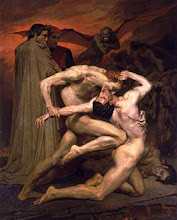
For one, we know the insipid questions of the jury, "Can you follow the law?" "Can you be fair?" "Can you f0llow the court's instructions?" should be frozen in the center of Dante's hell with Satan himself. These innocuous, evil, bland, perfidious, common questions mask the death. The sound of gagging and the sight of foaming at Morgan's mouth is drowned and blinded in the boredom of "Can you follow the law."

Evil is bland. And oppressively stupid.

Any juror who states that he or she will automatically vote for the death penalty without regard to the mitigating evidence is announcing an intention not to
follow the instructions to consider the mitigating evidence and to decide if it
is sufficient to preclude imposition of the death penalty.

Even one, then. Even one juror who will automatically vote for death. Who will not consider mitigation. That one, is enough to preclude death.

What in the world is this animal, a mitigation? A mother's glance. That is enough. Mercy. Yes, that too, is enough. Mitigation is a reason not to kill.

Wednesday, April 9, 2008

Before We Get To The Waterboarding

A standing joke among criminal defense lawyers is the perspicacity of arresting officers in finding probable cause to search a truck or car for contraband.

"I suspected he was carrying drugs, because he would not look at me and the guilty avert their eyes." Or, "I suspected he was carrying drugs, because he looked right at me and that is what drug dealers do to avoid suspicion."

"He acted nervous." Or, "He acted too calm for someone who had been stopped by the police."

And the one I like: "He only had one key with him, and that is typical of drug dealers." The first time I heard that I was in the courtroom with only one key with me.

Many officers clearly have better noses than bloodhounds:

"I smelled the strong odor of burning marihuana." And, "I smelled the distinctive odor of wet marihuana."

And another favorite. "The car was empty, but I could tell it had been abandoned because of the smell of illegal aliens." I prepared a cross-examination on this to test the officer's nose on distinguishing between an illegal alien or a permanent resident or merely a laser passing card. Also, I thought it would be instructive if his nose could tell whether it was a Mexican illegal alien or a Central American illegal alien who might have a right to sanctuary claims.

At border crossings, a similar phenomena occurs in the claimed ability of the agents to tell a truth teller from a liar.

The typical statement: "No, I didn't know there were ten kilos of cocaine welded into the gas tank of the car I was driving."

The feds do not audiotape or videotape interviews, so there is always a dispute about what was actually said. If two officers are present, their versions will differ slightly. And then the accused will have a different version. And then there will be a dispute about what was written down and when. And how it should have been translated and if the officer actually understood.

The officer at trial will want to testify, "He hesitated and then stammered in his response, and moved his hand in a characteristic evasive manner, so in my experience, I could tell he was lying."

Just like the movie in which the prospective father in law claimed he was a human lie detector machine.

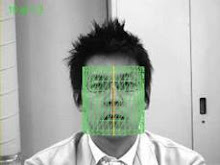
The inquiry to come, si Dios quiere, Readers True, is whether a lie detector machine or a lie detector person can really tell if someone is lying. This is of interest to me, naturally, because if you can tell when someone is lying I want to be able to do it for the purposes of judging a witness If the claim is just hogwash, I want to be able to show that during cross-examination.

In truth, I don't want to know if my friends are trying to protect me from an ugly truth, so I have no desire to apply the skill in personal life.

However, if a Javert or a Flambeau or a Monk can read the liar, it would be nice to find out. On the other hand, how do we distinguish that officer from Barney Fife and Fearless Fosdick when they come to testify?

For those among you who sit on the front row and raise your hand to be recognized, I offer the following texts in preparation for these (occasional and intermittent) sessions:

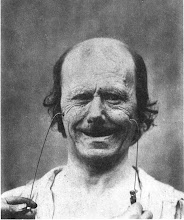
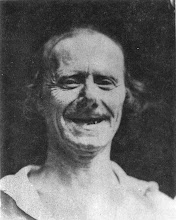
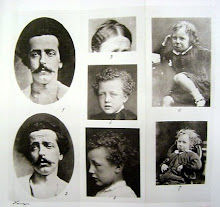
The Expression of the Emotions in Man and Animals by Charles Darwin.
Interrogations, Confessions, and Entrapment edited by G. Daniel Lassiter.
Never be Lied to Again by David J. Lieberman.
Principles of Kinesic Interview and Interrogation by Stan B. Walters.
What the Face Reveals edited by Paul Ekman and Erika L. Rosenberg.

Sunday, March 30, 2008

"The law serves of nought else in these days but for to do wrong."

A lawyer I knew blew his brains out this week. He was the founder of a successful firm based in several Texas cities.

Another lawyer I worked with took an overdose of heroin about three years ago. He had been barred by the judges from helping with indigent cases in Denton County.

I picked up a rifle from another lawyer-friend about the same time after he called me and said he was afraid he would use it on himself.

A Court of Appeals Judge in Austin killed who had been a successful plaintiff's lawyer killed himself a few years back.

An Hidalgo County judge killed himself.

I know it isn't just lawyers who commit suicide, but we seem to have more than our fair share.

I have tried to look up the statistics, but apparently death rates are not kept by profession well enough to figure it out. The dentist, police officer urban legend cannot be proved one way or another.

We do know the statistics on race and gender: Non-Hispanic Caucasian males are the big losers. A non-Hispanic Caucasian is 2.5 times more likely to kill himself than an Hispanic or African-American male.

Maybe that is because Anglo males tend to be dentists, police officers and trial lawyers.

I do have a sense that litigators are more likely suicides than office practitioners. Real estate lawyers and will writers seem to all die in their 90's--of boredom. I used to cut out and send a copy of the obituaries from the Texas Bar Journal to my friend Leo. I would tabulate the average age of death for trial lawyers, 53, and office practitioners, 93. Leo soon quit trying cases and has been aging very slowly in mind-numbing mediation work. He looks great.

What about the law practice would make life so unbearable that we cannot go on?

Tolstoy's short story One Day in the Life of Ivan Denisovich nails it. Many lawyers live a life worse than useless --this is a terrible burden to bear.

Many of us are trapped into work that, as its day-to-day work, beats down poor people. One of the speakers at the conference this weekend gave a stock justification of the law: it keeps us from taking our disputes to the streets.

I wish I could credit the law for this. My hard thirty-plus years in the law lead me to believe the purpose of the law is to make sure people who have the lion's share of the bounty in this land keep it and people who don't have any, don't get much away from them.

Criminal law hammers the poor. Civil law, to the extent it involves the poor, hammers the poor. There is an area of law euphemistically called civil litigation that is mostly big corporations suing each other and with this the poor only get hurt if they get in the way.

For a very brief period in the law in the United States there was an effort to help the poor. Workers' Compensation laws, products liability laws had a brief period when the poor could get a little redress. Criminal law took a brief run at protecting the rights of the poor. But the system has "righted" itself. The pesky poor people have been beaten back into their hovels.

Lawyers who once could make an honest living without savaging the poor have now had to move on. It is hard to find work these days that does not tear out the lining of the stomach.

Shakespeare's Henry VI, part 2 is often misquoted, either to attack or defend lawyers when Dick the Butcher says, "First thing we do, let's kill all the lawyers."

In Shakespeare's play, Jack Cade replies:

Nay, that I mean to do. Is not this a lamentable
thing, that of the skin of an innocent lamb should
be made parchment? that parchment, being scribbled
o'er, should undo a man? Some say the bee stings:
but I say, 'tis the bee's wax; for I did but seal
once to a thing, and I was never mine own man
since.


In life, he had reasons for his grievances against the law. He was the leader of about 5,000 Kentish peasants who briefly claimed London. They issued a manifesto called the The Complaint of the Poor Commons of Kent. One of the items of complaint:
The law serves of nought else in these days but for to do wrong, for nothing is spread almost but false matters by color of the law for reward, dread and favor and so no remedy is had in the Court of Equity in any way.
Jack Cade and his men were offered a pardon, betrayed, and the government stuck his head on a pike on London Bridge. Yep, he was right about the law all along.

If Shakespeare was correct in his description of Cade that he wanted to kill all the lawyers, then Cade was mistaken in believing this would help. Lawyers are seldom murdered by parties in lawsuits. We are fungible commodities. Kill one lawyer and you only get another.

But he was not mistaken in believing the law was the enemy of the poor. And it is becoming so again in these United States.

So Jack Cade won't kill us, but unless we can find a way to put a little service to humanity in our calling, many of us will perform the chore ourselves.

Friday, March 28, 2008

You will be presumed innocent, given a fair trial, and then hanged.

Treaties are entered into between Mexico and the United States, because both nations desire to see their citizens protected from the barbarity of the other. Or at least this, stripped of euphemism, is the idea.

The boasted difference I remember, even before law school, was that our system was superior to the civil law system because we have a presumption of innocence.

Most of us think of the presumption of innocence as the signal hallmark of the our system of justice. A speaker at a luncheon I attended today made an interesting point: Presumption of innocence is not in the Constitution.

I guess I knew that, but until he (Tim Evans, a Fort Worth lawyer) talked about it today, it did not really sink in.

As a practical matter, what does it mean? And if it is not in the Constitution, where did the right to presumption of innocence originate?

This is a judge-made doctrine. It is developed by the Supremes in 1895 in a case named Coffin v. US. Coffin was accused in a bank fraud scheme, but when he and others were tried the judge refused to tell the jury that, 'The law presumes that persons charged with crime are innocent until they are proven, by competent evidence, to be guilty." Refusal to read this sentence to the jury resulted in the Supremes ordering that he get another trial.

In making this decision, the Supremes say it goes clear back to the people of Israel as described in Deuteronomy and the city states Sparta and Athens. They had a presumption of innocence. Roman law and English law were said to be strong on the notion of presumption of innocence, also.

Since the time of the Coffin decision, many countries have required the presumption of innocence. The Europeon Union does now through the Council of Europe so all of the countries in the EU have the presumption of innocence. Canada, France and Brazil have adopted the doctrine.

The presumption of innocence is also part of the Universal Declaration of Human Rights, and as such should be binding on the United States, but I don't know whether, after this week, the Supremes would think Texas courts would be required to enforce it--it is international law, after all.

It was all based on the idea that it was better to let some guilty people to go free than convict an innocent person. Then there is the numbers game of how many guilty can be released to keep from locking up one innocent one. The legal commentator Blackstone, thought it was five. I have heard it argued that it was one, three and a thousand.

Evans said at lunch that he often asks jurors how many they thought was the right number of guilty to let go to avoid locking up an innocent one. Many people now, he says, don't want to take that chance. Some innocent people will just have to take their lumps so we will get more of the guilty.

DNA evidence has overturned many convictions where apparently jurors were not willing to risk not getting the bad apple, so they accidently nailed some innocent ones.


In all my criminal cases since I first went to trial to defend a burglar when I was 25 years old, then, the jury has been told my clients had a presumption of innocence and then I have dutifully made a final argument talking about the presumption of innocence.

Does it really mean anything? Does any juror ever say, "I think this guy is guilty, but I must presume he is innocent, and I would rather be wrong and cut loose several guilty guys instead of sending away this one innocent one, so I'm going to vote not guilty?"

I don't know if it has ever happened that way. I have seen people convicted with little more than an accusation by a police officer and no other evidence. One case I remember, the officer said he had gotten a call that a husband was beating his wife. By the time he got there neither the guy nor his wife would admit to any spousal abuse. At trial, only the cop testified and the jury still found him guilty.

More and more, people in the US are held waiting for trial without bond. Most people charged with drug and immigration crimes in federal court, for example, stay in jail until trial. If there really was a presumption of innocence, wouldn't people be out of jail until trial almost all of the time.

In the state system, a judge does not dare risk a bond on many types of crimes because in the next election it will be the big issue against him.

I think jurors also pretty well demand that a defendant testify before he will be found not guilty. The right not to testify is in the Constitution, but if juries require testimony for acquittal, that is a sign there is not a lot of confidence in this "presumption of innocence" thing.

Judges like to call presumption of innocence the "golden thread" in criminal law. I believe many of us live in fear. Fear, warranted or not, will blind us to this gold.