The ability to ascertain deception can not only be learned, but it can almost be near perfected, as a couple of your noted text will reveal. Your inability to do so, based on your personal frame of reference, will not allow you to believe that this is possible. To you, this is not reasonable.I accept the challenge, Sr. Kurgan. I shall open my mind to the possibility that the ability to ascertain deception can be near perfected.
In truth, I hope this is true, as long as we have a way to find out who has those skills. The fact that I now lack the skills, does not mean I do not aspire to learn them if they indeed can be learned. If I think I have learned the skill, I will likely credit it can be done. Even if I can't learn the skill, if someone else can demonstrate it in a controlled experiment, well, I am much comforted by that type of certainty.
My thought is that this inquiry is not anti-law enforcement, but rather a desire to have a more nearly accurate law enforcement.
DNA and fingerprints are good examples. Both of these tools are misused and misread by unskilled practitioners (remember the guy that got shipped to Spain to answer to blowing up the train based on a bad FBI reading), but, well-done, they have impressive results.
Perhaps twice in the last year, I have believed the system had grabbed the wrong guy. I wanted fingerprints. If we have the wrong one, we want a reliable way to test that. One young man was freed of his charges on the spot when the fingerprint guru (I think from Harlingen PD) showed up and said our man was not who the arresting officers thought he was. There was also about twenty tattoo differences, but we did not need to reach that.
The Innocence Project has shown that more nearly accurate law enforcement can help acquit the innocent. DNA has produced 215 post conviction exonerations. The average length of time served by exonerees is 12 years. The total number of years served is approximately 2,640. Sixteen served time on death row. And to me the most disturbing fact: False confessions and incriminating statements lead to wrongful convictions in 25 percent of the DNA exonerations. (How false confessions come about will be a later discussion).
Differently put, if either a machine or a person can accurately tell truth from lie, that would be helpful. We may produce another 215 exonerations.
Where do we begin? Stan B. Walters in his Principles of Kinesic Interview and Interrogation begins with the following:
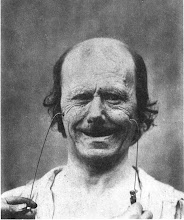
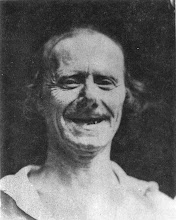
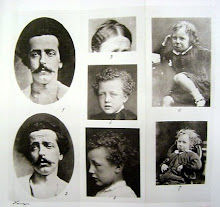
1. Darwin says, "Repressed emotion almost always comes to the surface in the form of body motion."Walters then give three reasons for the failure of people to accurately identify deception:
2. In general, human beings, including investigative interviewers, do a poor job at spotting deception, with the results being little better than chance. Walters cites (Ekman, O'Sullivan 1991).
In other words, Walters thinks most everyone gets it wrong now, but with the proper training, the problem can be fixed. This is the premise I want to explore.
1. Judging on verbal and non-verbal behaviors that are not reliable cues to deception.
2. Being unaware of the cues that do have a higher incidence during deception.
3. Making bad judgments because of the interviewer's preconceptions about the subject's likely credibility.
Before getting there, though, with a compulsive rejection of secondary sources, we should find out what Darwin really said.












_-_Dante_And_Virgil_In_Hell_(1850).jpg)