Showing posts with label death penalty. Show all posts

Wednesday, July 2, 2008

Kennedy v. Louisiana: I Agree 2 -- More Thoughts

Justice Alito argues in his dissent that there is not a national consensus to prohibit child rape that could be reflected in the "evolving standards of decency."  He's probably right about that.  As he notes, the language in the Coker decision thirty years ago prohibiting the death penalty for rape of an adult woman was broad enough to allow most state legislatures to assume that a murder was required for death.  That was pretty well my assumption and I assumed the Texas legislature was doing its usual meaningless posturing when the death penalty was extended to the death penalty for child rapes.

I think judges are more reluctant than the communities "standards of decency" to impose the death penalty in rape.  The confidence level that a crime has been committed in a murder tends to be higher in a murder than with a rape.  With a murder there is usually a body and a murder weapon.  It is of course possible to confuse a murder with an accident or a suicide and it is possible to get mixed up about who did it.  With a rape, there are the issues of consent and even whether there has been a sexual act.   

So if rape can be worse than murder (and it can) why not forge ahead and kill rapists?  Well, its the Scottsboro Boys.  It was 1931 and the Chattanooga to Memphis freight train was filled with young hoboes, white and black, male and female.  There was an altercation that involved the white teenagers being tossed off the train.  They complained to the stationmaster who wired ahead and a posse Paint Rock, Alabama stopped the train.  They unloaded all the blacks they can find, tied them up, threw them on a flatbed truck and hauled them to the jail in Scottsboro, Alabama.

They were brutalized legally and in the jail system.  They were given the death penalty without lawyers.  The racism was undisguised.  The case became a international scandal and new law was made trying to find a way to keep Alabama from lynching the young men.
Most likely from the examining doctor's testimony a rape was never committed.  The girls had been seized by the posse in Alabama and were under pressure to cooperate.  The doctor found sperm, but it was not motile and too old to be from the train ride.

As I remember the history I read years ago, had it not been for the American Communist Party the teenagers would most certainly have been hanged.  The NAACP was a afraid of the case because of the issue of rape.  Other normally activist groups were similarly passive.
A black on white rape was easy to allege, hard to deny and could serve as a great tool to control an under-class.  I think this is part of the reticence today to apply the death penalty to race cases.

However, I understand the reluctance of Mr. BB and others to rely on "evolving standards of decency."  I have written before here about the risk that evolution can give a bigger or a smaller product at the end of the process.  Little horses have evolved into big horses, but big armadillos have evolved into little armadillos.  Our sense of dignity historically allowed genocide against different Indian peoples and could well evolve into mass murder and internment camps again.
The confidence placed in the written word is misplaced though.  How much is the Article I, the Texas Bill of Rights honored?  Was has become of being secure in a persons, etc?  Where are those 4th, 5th, and 8th Amendments when we need them?

Original intent is very logical, but are we willing to swallow the pill that comes with it.  Our evolving sense of dignity has rejected both banishment and punishment by hard labor.  Do we want these back?

The founders' sense of decency allowed slavery and prohibited women the vote.  Are we ready to return to those wise days?

And as Mr. WC notes, homosexual acts could bring the death penalty.  In fact one Joseph Ross was executed for "buggery" by the state of Pennsylvania in 1785.  That's not all, though.

 Blasphemy and idolatry were capital crimes in Connecticut, Massachusetts, and New Hampshire.  Adultery was capital in Connecticut, Massachusetts and New York.  Sodomy and bestiality were capital throughout the northern colonies, even for the animals involved.
Other capital crimes included robbery, burglary, arson, manslaughter, rape, highway robbery, maiming, burglary, arson, witchcraft, counterfeiting, squatting on Indian land, prison-breaking, piracy, perjury, embezzling tobacco, fraudulently delivering tobacco, forging inspectors' stamps for tobacco, smuggling tobacco, stealing hogs, receiving a stolen horse and concealing property to defraud creditors and burning timber intended for house frames.  

There were special capital statutes applicable only to blacks.  These included burning or destroying any grain, commodities, or manufactured goods, enticing other slaves to run away or "bruising" whites.  Virginia feared attempts at poisoning and made it an offense for blacks to prepare or administer medicine.

I hope an execution for most of these offenses would offend the sense of decency for most of us.  The colonial and state legislatures, though, gathered a majority to allow an execution for all of these laws.

Can't we acknowledge the sense of decency has and should change?  Or should go round up a black pharmacist and kill him to avoid the threat of poisoning?

Saturday, June 28, 2008

Kennedy v. Louisiana: I agree.

Kennedy v. Louisiana.  This is the case that told Louisiana they could not execute a man convicted of child rape.  I have finally, and somewhat belatedly, waded through the 65 page decision and am no ready to toss my two cents on the scale.  I would have voted with the majority and prohibited the execution, but I may have given my own concurring decision.  Not that my opinion matters much, but since I get to give it for free, why not?

Let me first, though, describe my friend who while waiting for the bar results and impoverished, worked in a chicken factory in  East Texas.  I never saw the place, but she described it as thousands of chickens in all stages of hunger, drugging, narrow confinement and slaughter.  It was twenty years later and she would not eat a chicken.

I will confess that I view every new Supreme Court decision through images of thirty plus years of watching the hunger, drugging, narrow confinement and slaughter of human beings.  Not only do I lack the desire to eat them, I just don't see much point in their confinement and slaughter anymore.

So why not kill child rapists?  I don't dispute the proposition that rape can be a more depraved crime than  murder.  Rape can destroy a life just as effectively as a bullet in the brain.  Most of the sexual predators I have represented were childhood victims of rape.  It is much like those horror movies in which, once bitten by the vampire, you become one.  

Moreover, a lot of murders are not particularly depraved.  Anecdotally, at least, they make the best trustees.  The murderess who is chosen to be the nanny to the warden's children is part of prison lore.  My dear old dad requested a parolee as a care-taker and, believing the lore, asked for a murderer.  I ended up putting him in a nursing home instead, but the sentiment was there.

A lot of crimes are more depraved than murder.  Bhopal for instance.  AT&T in Chile.  IBM in Nazi Germany.  Asbestos companies.  The Pinto gas tank.  The War in Iraq.  

So, for me, the proportionality argument does fall flat.  But I have other and I think better arguments why the decision was correct.  More later.

Thursday, June 26, 2008

Lynchings, Poverty and Executions

I'm only recently back from my annual pilgrimage to Gerry Spence's Thunderhead Ranch near Dubois, Wyoming.  Sara and I went for the capital punishment seminar.  Sara is returning as an intern for the Trial Lawyer College this summer.

I have attended since 2001.  The top defenders in death penalty cases come from around the country to work on their cases.  

A week of death is not exactly a cheery prospect, but the weather is cool, the surroundings are peaceful.  Because there is no internet or cell phone access, we have an enforced isolation that allows reflection.

This is a very unselfish group of lawyers.  Lawyers in other fields often hide their secrets of success.  Professional jealousy and the competition for clients may result in protecting what little is known to make sure some other lawyer doesn't get the case.  Capital punishment defense lawyers do not do this.  No one ever knows if the next case is the one that will result in the type of melancholy that ends a career.

So skills and ideas are shared freely, making it an easy field to enter.  And of course poverty and crime are a growth industry.

One interesting discussion is the relationship between slavery and the death penalty.  States with a legacy of slavery are far more likely to have the death penalty.  To the extent the lynchings were used to enforce slavery and then Jim Crow laws, those areas continue with the death penalty.  A map provided to me by my scholarly friend, Phillip Cowen, darkens the counties that had lynchings; Phillip argues there is a correlation between the lynchings in past and legal executions today.  Cameron County is of the darkest color.

Why would either be necessary?  I think they are rational.  If you want to terrorize an underclass to keep them from challenging people in power, lynchings and legal executions are a tool in the arsenal.    Because Cameron County has an extreme divide between rich and poor, we would expect many death sentences.  And we get them.


Saturday, May 10, 2008

Cameron County Can't Afford Death Penalty Prosecutions

How much does it cost to kill a man? How much should it cost?

North Carolina estimated that that an execution costs $2.6 million more than a non-death murder case. Florida says $3.2 million per prosecution, but the average cost of those executed has averaged out at $24 million. Californians have paid more than a quarter of a billion for each of the state's eleven executions.

The Dallas Morning News estimates that each Texas death penalty case costs an average of $2.3 million.

The trial alone involves a hefty increased fee. The State of Kansas estimated $508,000 per capital case more than plain vanilla murder. The State of Washington said it was $470,000 on top of the costs for another type of murder. Washington also estimated as much as an additional $70,000 for court personnel and $100,000 for appeal.

In a February 4, 2008 article in the New Yorker Magazine called Death In Georgia: The high price of trying to save an infamous killer’s life by Jeffrey Toobin, the author describes a trial in which the entire indigent defense budget of the county of $1.2 million was exhausted before the first juror was picked. The case had to be put on hold until more money could be found.

Cameron County has charged about 100 people with capital murder according to an i-docket count. These cases appear to go back about ten years.

I recently requested a count of the number of pending capital prosecutions in Cameron County. The number is an extraordinary 18 cases with two on death row.

With even a conservative price of, say, $2 million per execution and Cameron County proposes to execute all twenty of these people, the price will be about $40 million. I am not accountant, but this looks to me like it is impossible with Cameron County's budget.

Nor am I very good at reading budgets, but it appears that the Cameron County's 2008 is $111 million. The indigent defense budget is located in two places. One is for personnel in the amount of $199,000, down from $223,000 in 2007 and the other from a General Fund in the amount of less than $900,000. My guess is the second number represents the approximately $6,000 per month per court for contract attorneys and appointments and the first number is court personnel who run the system, but I welcome correction and explanation from the numbers crunchers among you, Readers True.

Assume that no new capital indictments are issued and the costs of the 20 now targeted for death is spread out over five years, that is still $8 million per year. The entire cost of the jail for 2008 is only about $4 million. The district courts are $2.4 million a year. The County Courts at Law run $1.5 million.

In other words, to truly prosecute and defend this many capital cases, the expense would be greater than the entire criminal and civil justice system in Cameron County. We would need to shut down the jail and all the courts to be able to fund the prosecutions, but of course then we would have no place to put or try the capital inmates. Either that or cut into indigent health care, burials and road crews.

So if the numbers are impossible, how is it that Cameron County is pretending to prosecute 18 pending capital cases with two on death row. I have a couple of guesses. One is that many of these 18 shouldn't be capital cases at all and will be reduced, but only after small fortunes are spent to pretend they are capital cases for a while. Another is that the judges will try to defend these cases without spending this much money.

Every old-time criminal lawyer has a story about how he was made to take a capital case, worked on it for months or years and then either not paid or paid a pittance. Other horror stories abound of expert witnesses who were stiffed. Differently put, the county pretended to pay for the defense of capital cases, but did not. So the quality of justice was low, which means in in a capital case that the risk of executing the innocent was high.

The law has changed in the last few years so that if the lawyer falls asleep in the course of the trial of a capital case or the trial judges refuse to pay for needed expert witnesses, the cases will be reversed and sent back to be tried again. For a defense to be constitutional, every defendant must have a mitigation specialist thoroughly investigate the background of the defendant and present that information at trial to support life rather than death. He must have a psychologist on the trial team. He must be able to investigate the facts and have experts who can analyze the physical evidence. He must have parity with the state in resources.

As far as I can tell, these minimum requirements have not been met in the past. Under these conditions, if things are not done better now than they were before, Cameron County may produce some death penalty convictions, but they won't be legal.

We will enter into an endless cycle of cheap, illegal trials that have to be redone because no one has the political will to require that indigent capital defendants receive a defense that meets minimum requirements of the constitution. Because of lawyer errors, we will likely get some executions, but we won't really know if the people being executed are guilty.

We pay a high price for cheap justice.

Friday, May 2, 2008

An Eye For an Eye

People keep saying to me, "an eye for an eye." I suppose I bring it on myself, but they look at me and as if I have forgotten something obvious that can be put right by a simple reminder they say, "An eye for an eye."

Once the reminder is given, I believe I am expected to say, "Oh yes, you are right. How could I have been so foolish. That's right, "an eye for an eye." And then I will change my mind about whatever silliness I had said before and the world is properly ordered again.

"Eye for an eye" comes out of Exodus. God has led the Israelites out of Egypt, but they need some rules to govern themselves. First, God gives the Ten Commandments. Then He tells Moses that there are rules Moses must give to the Israelites.

"If someone buys a male Hebrew slave, the master has to let him go in seven years, unless the slave loves the master then the master can pierce the slave's ear with an awl and the slave will serve for life."

"If someone curses or strikes his father or mother, he will be put to death."

"When a slave-owner strikes a male or female slave with a rod and the slave dies immediately, the owner shall be punished. But if the slave survives for a day or two, there is no punishment; for the slave is the owner’s property."


And then if people are fighting they injure a pregnant woman, and she only has a miscarriage, but no other injury, they have to pay her husband a fine, but if there is other injury (apparently to the injured pregnant woman). "If any harm follows, then you shall give life for life, eye for eye, tooth for tooth, hand for hand, foot for foot, burn for burn, wound for wound, stripe for stripe."

Moses then goes on with some other rules:

"If a thief is found breaking in, and is beaten to death, no blood-guilt is incurred; but if it happens after sunrise, blood-guilt is incurred."

"When a man seduces a virgin who is not engaged to be married, and lies with her, he shall give the bride-price for her and make her his wife."

"You shall not permit a female sorcerer to live."

"Whoever lies with an animal shall be put to death."


Then there are a couple that I like that are seldom mentioned:

"You shall not wrong or oppress a resident alien, for you were aliens in the land of Egypt."

"If you lend money to my people, to the poor among you, you shall not deal with them as a creditor; you shall not exact interest from them. "


Differently put, even for the time the laws of the Israelites were given, it is a little difficult to expand this law to include killing all those people in Hiroshima and Nagasaki. When God destroyed Sodom and Gomorrah, he got all of the innocent people out first.

Some of us aspire to be, or pretend to be, or think we are followers of the teachings of Jesus. What did Jesus make of this eye for an eye?

Jesus' words parallel those of Moses. Instead of the Ten Commandments, He gives the Beatitudes. Then Jesus states a series of laws and provides for a different reaction to the law that goes beyond the law and provides for mercy. In particular about the "eye for an eye," He says:

You have heard that it was said, “An eye for an eye and a tooth for a tooth.” But I say to you, Do not resist an evildoer. But if anyone strikes you on the right cheek, turn the other also; and if anyone wants to sue you and take your coat, give your cloak as well; and if anyone forces you to go one mile, go also the second mile. Give to everyone who begs from you, and do not refuse anyone who wants to borrow from you.
I am no scholar of the Bible, but somehow this does not sound to me like Jesus is insisting on capital punishment.

As Gandhi suggested, "An eye for an eye will make the whole world blind."

It seems to me the complete statement when using "an eye for an eye" as an argument for retaliation should be something like this:

"I know Jesus fulfilled this law of retribution by providing for a higher law of love and mercy. I know He said the only true law was to Love God and Love Other People. I know He said not to resist an evil doer. But I don't accept Jesus' teachings. He is wrong about these things. My sense of justice says that Jesus may even be immoral or crazy for suggesting such a thing. I want to go back to the law Moses, and at least if a pregnant woman is injured when people are fighting we should knock out the eye of anyone who knocks out her eye. And we should kill all the witches."

Sunday, April 27, 2008

Texas, Bloody Texas. Cameron, Bloody Cameron.

Texas had 60% of the death penalties in the country in 2007. Of the 42 executions in the nation, 26 were in Texas. The next two highest states were Louisiana and Oklahoma, with 3 each. It is as if the proximity to Texas increased the numbers.

David Dow, a law teacher at the University of Houston believes the other states will continue to decline and soon Texas will have all the executions in the United States:

“The reason that Texas will end up monopolizing executions,” he said, “is because every other state will eliminate it de jure, as New Jersey did, or de facto, as other states have.”

The last man killed in Texas was Michael Richard. On September 25, the Supreme Court accepted a review of death by lethal injection in Baze v. Rees. That same day, Richard's lawyers came rushing in with a stay of execution a few minutes after 5:00 p.m. Presiding Judge Sharon Keller instructed the clerks, without consulting the other judges, to refuse the filing. That same evening Richard was executed.

In an Austin-American Statesman article, the judge in charge of the case Cheryl Johnson was quoted as saying her reaction was "utter dismay."

"And I was angry," she said. "If I'm in charge of the execution, I ought to have known about those things, and I ought to have been asked whether I was willing to stay late and accept those filings."

Overall, though, the number of executions are declining. And there is hope there will be fewer in Texas sent to death row because Life Without Parole is now available.

When Texas passed life without parole in 2005, it was already available in 47 states. Senator Eddie Lucio deserves the credit for its passage. Sen. Lucio sponsored the bill and was its primary moving force in the Senate. Gov. Perry signed it. Pax Christi members are grateful to Sen. Lucio for his support of the bill. We don't know if it would help him or hurt him to have our support, so we will leave that decision to him. I believe he has saved about 15 lives a year as a result of the change, and may begin to change Texas' reputation for being the most blood-thirsty of states.

As well as I can count by the numbers currently on death row are trending as follows:

2002 33
2003 28
2004 23
2005 15
2006 11
2007 15
2008 1 (to date)

The life without parole option is of course not the only factor in reducing the death penalty. DNA exonerations are also important. In 2001 Governor Rick Perry declared a legislative emergency after he pardoned a man who had served 15 years after being wrongfully convicted of rape. He fast-tracked a bill that allowed convicts to get state-funded DNA tests if biological evidence was available and they could show that ere was a reasonable chance of exoneration.

Of the first 32 tested in Dallas County, 12 were exonerated. On April 15, Dallas County announced its 16th exoneration. Even the Dallas Morning News, after a century of supporting the death penalty, declared that it doubted that Texas could guarantee "that every inmate it executes is truly guilty of murder."

In modern times, Cameron County has sent at least 6 people to their deaths by execution. One had never been to prison before, was identified, not at trial, but in a dying identification from a photograph. His last words: I am an innocent man, and something very wrong is taking place tonight. May God bless you all. I am ready.

Thursday, April 24, 2008

They viewed the vast immeasurable abyss Outrageous as a sea, dark, wasteful, wild

Pax Christi is a Catholic Peace Organization. We have a meeting Monday, April 28 at 7 pm in the conference room at the St. Mary's Parish Office, 1300 E. Los Ebanos Blvd. The Office of State Representative Eddie Lucio III report to Pax Christi representatives that Rep. Lucio will be present to review death penalty issues. This is open to the public and we encourage you to come. Your presence will not be taken as an indication that you agree with the views of Pax Christi. I will make a presentation with a nifty power-point presentation and my usual good-humored acceptance of people who disagree with me.

I have been practicing jury selection questions about the death penalty with my friends in hopes of getting myself ready for a trial. The responses (from those people who did not simply run and hide from me) have been surprising both to me and the ones I was questioning. In hypothetical questions, people who viewed themselves as anti-death penalty voted for death and some who viewed themselves as favoring the death penalty in the hypothetical questions opted for life without parole. There also seems to be little correlation between views on the death penalty and other political views. There are a lot of pro-life conservatives and pro-death liberals.

Carefully formed intellectual constructs about the death penalty are blown away even when a hypothetical question is posed informally. I am not sure any of us really know what we would do if truly faced as a juror with the decision to kill or not to kill.

So I will offer a hard case for the conscientious objectors among us. (I pray that if the moment of truth every arrives for me I would still find myself among that group--but who knows?) Hard cases are legion. This one is from today's news:

The Birmingham News announced the death by pancreatic cancer of serial killer Daniel Siebert this week. Siebert had been on death row for 22 years and had been one day from death last October, but was granted a stay because of the challenge to the means of lethal injections.

He murdered with slow strangulation and had five victims in Georgia including his girlfriend, a student at the Alabama Institute for Deaf and Blind, and her two young children and another woman in the apartment complex where they lived. He confessed to another 13 murders nationwide.

Even while on death row, Siebert had been uncommonly odious. He made sexually exploitive and sadistic drawings that were peddled for money on a website devoted to what it called "Murderabilia." This brought a call from the Alabama legislature to find a way to stop the trade for profit of death row drawings.

The children of a victim issued a statement and expressed disappointment that Siebert had died of natural causes before execution.

What am I to make of this?

The law calls the response retribution, and there have been times when I have thought that this was the only argument for punishment that was irrefutable. A desire for vengeance--this, I have experienced and can understand.

My fantasies and sometimes dreams in my sleep of retribution, vengeance against someone who had wronged me (many fewer now that I am getting old) always involved an act by my own hand. Gun, knife, strangling. My imagined wrongdoers to whom I owed a righteous vengeance were always rivals I feared. Another lawyer, maybe, or a politician. Some of those people became my friends as years passed. Maybe my own fear that I have the potential for violence may have been a factor in moving me to a philosophical position of non-violence.

And of course those philosophical world views that we develop for ourselves may or may not survive the anger in the heat of the moment. My Dear Old Dad used to warn me about pacifists: "Be careful, those guys are killers." I am not sure if this was just his love of the paradox or he had some basis for the belief. He claimed he and other surgeons entered the field as a way to direct sadistic impulses--a socially acceptable way to cut people. I can imagine the pacifist who reacts in this way to control violent impulses. Something like the person who decides to become celibate to avoid being a sexual predator.

Why though, wasn't the life of misery and the horrible death of Daniel Siebert satisfying to victim's children? Twenty-two years on death row. One inmate describes the experience like this:
We are kept in constant confinement, locked in-cell all day long - except for the five days a week we are allowed one whole hour outside (in another, slightly bigger, cage). Cell temperatures are kept cold and breezy by powerful forced-air vents, yet permissible clothing is limited. All meals are served in-cell, on a filthy tray shoved through a slot in the door. Showers? For us, it's three times weekly. As for visiting, we are limited to two hours per week, with added physical restrictions: all death row visits take place in a 4' x4' separation booth, behind a barrier. (All this after prisoners' family, friends and attorneys' drive many hours to reach this remotely-located prison.)
This from a Robert Buehl incarcerated in Pennsylvania.
And then death by pancreatic cancer, normally a relatively rapid death (months of agony), but an especially painful death, even under the best of conditions with morphine and hospice care. And from what I know of prison medical care, I suspect Mr. Siebert's care in Alabama was less than ideal. (If I knew the choice was lethal injection or pancreatic cancer for me in an Alabama prison, I may well be too afraid of the cancer pain. Like those people who jump to their deaths out of a burning building).

The victim's children reported they did not have a sense of satisfaction from this end to Daniel Siebert.

Would an execution have actually been better, though? I don't know.

I do believe that we who choose to defend those accused of capital crimes (either in or out of court) must be willing to face the worst of cases and be willing to face the suffering caused the victims.

Friday, April 18, 2008

There is Blood on the Moon. Give me that Meat Axe.

This death thing incites such passions. I have spent the day listening to the play-jurors of Collin County Texas insisting on death. They wanted gruesome deaths. "Well, if we don't give them the needle, at least hang them up and let the families beat them to death."

The polls still put the preference for death at 63%.

Lord help me. For once in my life, I wish I were in the majority. Maybe then, I would get the good feeling of co-religionists all around with a shared view of God and the world. We would all be happy together and the shared happiness would be boosted to a new level. Like Alka-Seltzer in a glass of water, we would bubble over with a new enthusiam and join hands in song.

But it is overwhelmingly difficult for me to join in the song of death.

Derrick Morgan lured a friend to his death and shot him six times in the
head. He was paid $6,000 for the murder. It was a matter of the
invisible hand directing the competition for the sale of narcotics.
Sometimes, a lower price is not the most effective means of
competition.
God bless Adam Smith.

I left North Texas for many reasons, but over all it smelled of death. When an attorney friend took too much heroin on purpose, after the good-hearted judiciary refused to allow him to makejail visits in my cases, the bile just wouldn't stop. Father, forgive them, because I am havingsome difficulty along that line.

How many did George H. W. Bush kill in the turkey shoot? To what are we measuring this evil of Mr. Morgan?

So with this love for death, this fascination with death, (Were the Aztecs really like this? Were those grooves in the rocks really for the flow of blood?) how, in the name of faith, hope and charity can we ever pick a jury who will not kill?

Morgan killed and then twelve jurors chose to kill. What has that miserable little life brought us?

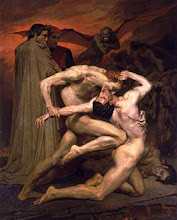
For one, we know the insipid questions of the jury, "Can you follow the law?" "Can you be fair?" "Can you f0llow the court's instructions?" should be frozen in the center of Dante's hell with Satan himself. These innocuous, evil, bland, perfidious, common questions mask the death. The sound of gagging and the sight of foaming at Morgan's mouth is drowned and blinded in the boredom of "Can you follow the law."

Evil is bland. And oppressively stupid.

Any juror who states that he or she will automatically vote for the death penalty without regard to the mitigating evidence is announcing an intention not to
follow the instructions to consider the mitigating evidence and to decide if it
is sufficient to preclude imposition of the death penalty.

Even one, then. Even one juror who will automatically vote for death. Who will not consider mitigation. That one, is enough to preclude death.

What in the world is this animal, a mitigation? A mother's glance. That is enough. Mercy. Yes, that too, is enough. Mitigation is a reason not to kill.

Tuesday, April 1, 2008

Our Sense of Decency Has Evolved How Far?

The Supreme Court rejected the appeal of Elkie Lee Taylor today. He was a sixth grade dropout who tested 63 on an IQ test that generally considers under 70 as retarded. Unless the manner of execution by lethal injection is thrown out, Mr. Taylor will probably be executed.

In 2002 the Supremes decided Atkins v. Virginia and banned execution of the mentally retarded. Then, they left the decision up to the states on how to determine who is mentally retarded.

Since Texas has only killed 402 since 1982, and 403 seems like a much better number, Mr. Taylor is back on the list.

Texas has an odd way of determining mental retardation if you accept the present position of the Texas Court of Criminal Appeals. We don't need to find out ahead of time if the guy is retarded. Just try him and if he gets convicted then the jury can decide if he is retarded when they are considering sentencing.

The problem with determining mental retardation at sentencing is that the jurors’ values may not comport with a constitutional requirement to spare the mentally retarded. It may be our (America's) sense of decency has evolved far enough not to execute the retarded, but if we get some of those unevolved jurors, they may not be willing to find mental retardation to spare a killer, even if it is so.

What about a dangerous, mentally retarded man who will most likely kill again. The Constitution may now say, "No execution," but the jurors (who have already been qualified in their ability to consider the death penalty) say, "Well, especially if he is retarded, on top of being a dangerous killer, should we execute him."

Justice Brennan discussed this problem in an earlier decision:

“It appears to us that there is all the more reason to execute a killer if he is also . . . retarded. Killers often kill again; [a] retarded killer is more to be feared than a . . . normal killer. There is also far less possibility of his ever becoming a useful citizen.”

In arguing against assessing mental retardation during sentencing, Justice Brennan states, “Lack of culpability as a result of mental retardation is simply not isolated at the sentencing stage as a factor that determinatively bars a death sentence; for individualized consideration at sentencing is not designed to ensure that mentally retarded offenders are not sentenced to death if they are not culpable to the degree necessary to render execution a proportionate response to their crimes.”

So this is still the problem if the death penalty comes from Texas. Just because the shrinks may say the guy tests retarded, the jury may not want to, especially since they will know that it means letting a killer live, retarded or not.

The Supremes did not decide Mr. Taylor should die, they just refused to hear the case. Mr. Taylor may not be too excited about the distinction since he still may end up six feet under. Besides, he has an IQ of 63.

One of the mentally retarded executed before our sense of decency evolved in Atkins is said to have been given the last supper of his choice. He did not eat the dessert. When asked, "why not," he said he was saving it for later.

Saturday, March 29, 2008

Violence Unveiled--What is this mimetic desire and why does it make me want to kill?

A standing joke Kathy and I have is based on our different tastes in movies. I expect a murder in the first five minutes and then ongoing murders throughout the movie.

Kathy likes movies about a long lingering death of a loved one. My movies involve, Charles Bronson or Clint Eastwood or someone like that who is badly wronged in the beginning of the movies and then he kills people all through the rest of the movie to get even. The children's version of this would be Mighty Mouse.

Why do I find this kind of movie so satisfying? I began to get some insight into this question about ten years ago. Near the time it first came out, I read a book called Violence Unveiled: Humanity at the Crossroads by Gil Bailie. It is one of a dozen books I have read that immediately altered my view of the world. Since I read that book, I see many social relationships, including my own, in a different way.

This book is actually a popularization of a philosopher, Rene Gerard. Since reading Bailie's book, I have read books by Girard himself, but I find them heavy lifting, so I mention Bailie's book first. This is a theory about why people act like they do.

Bailie, following Girard, supports the theory by giving examples from anthropology and literature. Let me describe my simplification of Bailie's simplification: People, from the time we are little babies, must imitate other people. We see someone else and we want to act the way he acts, look the way he looks, have the things he has. We must do this because this is the way we learn and become older human beings--it is part of the essence of being human. So every healthy, whole human being begins with this desire. Bailie calls it "mimetic desire."

What is "mimetic?" It just means someone is apt to imitate. A snake that looks like a poisonous snake, but is harmless, but survives because it looks like the poisonous snake is a mimetic animal. It comes from a Greek word that means "imitate."

In most ways the mimetic desire is something good for society, especially when it involves copying knowledge or copying values:

The English teacher recites Shakespeare and now all of his students want to recite Shakespeare.

Dad is kind to beggars and now his children are kind to beggars.


When it involves a desire for other people's stuff, it is a little less attractive:

On a simple childhood level, one kid has a toy. Another kid wants to take the toy away from him, but when the first kid loses interest in the toy, they both do and it sits in the middle of the floor where neither plays with it.

One young lawyer drives an expensive sports car, so his buddy wants an expensive car too.


Move on from things to treating people as objects, and it can get really nasty:

The young woman is more attractive to her husband's friend when she is married than after she is divorced. "If he wants her, I want her too, but if he doesn't want her, there must be something wrong with her and I'm not interested."

John Lennon is rich and famous and I'm not so I guess I'll kill him.


Mimetic desire can also be more generalized, between people who identify themselves with groups and with a risk of a bigger level of violence:

The Dutch own all of the property and we want some property.

Mexican immigrants are taking jobs and we want those jobs.

The Jews own all of the banks and newspapers and we want the banks and newspapers.


So, we have mimetic desire both among each other within a group and generalized between group.

Bailie says that one way that people within groups work out their own risk for violence arising from mimetic desire is to find a scapegoat to sacrifice. This scapegoat can be literal, in the sense of animal sacrifice, or it can be metaphorical, in the sense of picking out an individual and throwing him out of the group. He then takes the blame for all of the problems the group was having and there is a period of peace.

An example of this in daily life would be a workplace in which everyone is fighting. Someone gets fired and then everyone can blame the scapegoat for all of the problems. A period of peace reigns.

A classic political example is Hitler's use of the Jews as a scapegoat for disputes among the German people. By sacrificing the Jews, we have someone to blame for all of our problems and now we can get along.

Many political efforts at unifying a generally violent community involves finding the scapegoat to blame, so the rest of us can mend our differences: Muslims, homosexuals, communists.

How does the act of violence against one outcast bring the others back together? Bailie illustrates this with a story of a wise man who was asked to heal the community of a generalized plague of violence. The wise man finds a beggar and tells the mob who have been fighting each other that the begger is a demon. At first, individual members of the mob resist, but then someone throws the first stone. Soon, everyone else pitches in and they stone the beggar into an unrecognizeable bloody pulp. The wise man then says, "See, it was not a beggar, but a demon. Now it has transformed into a bloodied Milosian Hound."

Everyone's guilt is assuaged because they know they have not killed a innocent beggar, but a demon, now transformed into a hound. Also, the act of violence against the beggar allows the mob job to join in a common cause rather than fighting among themselves. The plague of violence in the community comes to an end, at least for a while.

Bailie contrasts this solution with Jesus' solution to a plague of violence in which Jesus himself becomes the beggar and the Milosian Hound, but allows the mob to see the violence from His point of view. The myth of sacred violence is then exposed for what it is--injustice.

Back to Clint Eastwood and Mighty Mouse. My generalized anger towards others who either have something I want or want something I have can be calmed for a while watching the movie.

Clint and Mighty Mouse are the good guys. By stoning some Milosian Hounds we can all feel better for a while.

This also explains why prisons and the death penalty can make the rest of us feel better for a while.